
A brand’s mission and vision statements are not just decoration. They are a public promise. For large companies, these statements tell you what the business believes in, who it serves, and where it is trying to go. When the words are clear and the actions match, a mission statement can be the anchor that guides every department from product design to marketing.
Few companies demonstrate this as powerfully as Nike. The brand built a global following not just on shoes and apparel but on a philosophy of sport that includes everyone. Nike’s statements are short, memorable, and backed by decades of consistent behavior. They offer a case study in how to write declarations that actually work.
Nike’s official mission statement is: To bring inspiration and innovation to every athlete* in the world. *If you have a body, you are an athlete. Nike does not publish a separate vision statement on its official site, but the company uses a clear purpose statement and strategic language to describe its forward direction. Understanding how these pieces fit together reveals why Nike remains one of the most studied brands in business. Let us examine each element in detail.
What Is Nike’s Mission Statement?
To bring inspiration and innovation to every athlete* in the world.
*If you have a body, you are an athlete.
This exact wording is published on Nike’s official help page and its corporate impact report. The mission statement has three distinct parts, and each one carries real weight.
First, the company commits to delivering two things: inspiration and innovation. Inspiration speaks to the emotional side of sport. It is about stories, motivation, and the belief that someone can achieve more than they think. Innovation speaks to the practical side. It means new materials, better design, and products that solve real problems for people who move. Nike is not promising just to sell things. It is promising to push both emotional and functional boundaries.
Second, the company names its audience: every athlete in the world. That is an intentionally broad claim. It covers elite professionals and weekend runners alike. It covers team sports and solo training. Geographically, the word “every” signals a global ambition that matches Nike’s distribution in over 190 countries.
Third, the asterisk and the footnote redefine who counts as an athlete. “If you have a body, you are an athlete.” That line, attributed to co-founder Bill Bowerman, transforms the mission from a narrow sports statement into a universal one. You do not need a contract or a medal to qualify. If you move, you belong. This single line is what makes Nike’s mission feel different from competitors who focus only on performance or winning. It opens the brand to everyone, which is also a smart business strategy. A bigger definition of athlete means a bigger addressable market.
101 Mission Statements is for you if:
- You’re a leader or entrepreneur needing a clear, inspiring statement of intent for your business or nonprofit.
- You want your team and clients aligned with a shared vision of excellence and long-term goals.
- You need a step-by-step guide to craft a customized mission statement that acts as a blueprint for future success.
What Is Nike’s Vision Statement?
Nike does not publish a separate, standalone vision statement on its corporate website. This is worth stating plainly because many third party sources quote unofficial versions. You may see phrases like “to remain the most authentic, connected, and distinctive brand” or “to do everything possible to expand human potential.” Those lines appear in academic analyses and business databases. They are not, however, published by Nike itself as an official vision statement.
What Nike does publish is a purpose statement that functions as its directional guide. On LinkedIn job postings and its careers page, Nike states: Our purpose is to unite the world through sport to create a healthy planet, active communities, and an equal playing field for all.
In addition, Nike’s FY23 Impact Report describes the company “pursuing its vision of creating a better world for all athletes, one that’s inclusive, equitable, diverse and sustainable.” This language is the closest Nike comes to articulating a forward looking vision. It describes a desired future state rather than a present activity, which is exactly what a vision statement is supposed to do.
Taken together, these statements paint a picture of where Nike wants to go. The company wants a world where sport is not an exclusive club but a shared language. It wants a planet where the business of making products does not harm the places where those products are used. And it wants communities where access to play does not depend on gender, geography, or income. That is an ambitious vision. It also sets a high bar for accountability because each piece of it is measurable.
Key Differences Between Nike’s Mission and Vision
Nike’s mission and its broader purpose are distinct in important ways. The table below breaks down those differences.
| Aspect | Nike’s Mission Statement | Nike’s Vision / Purpose |
|---|---|---|
| Focus | What Nike does daily: deliver inspiration and innovation through products and storytelling. | What Nike wants the world to become: a healthy, inclusive, sustainable place united by sport. |
| Timeframe | Present tense. This is the ongoing work. | Future facing. This is the destination. |
| Primary Audience | Every person with a body, no matter their skill level. | Communities, the planet, and the broader sports ecosystem. |
| Core Question Answered | Why does Nike exist? | What kind of world does Nike want to help build? |
| Purpose | Guides product design, marketing, and daily decisions. | Guides long term strategy, sustainability goals, and community investment. |
The mission and the vision work together because you cannot reach a future destination without doing the daily work. Nike’s mission focuses on what the company controls: making innovative products and telling inspiring stories. Its vision focuses on what the company hopes to influence: a fairer, healthier, more connected world. Both are necessary. A mission without a vision becomes a treadmill. A vision without a mission becomes a daydream.
Core Values Behind Nike’s Mission and Vision
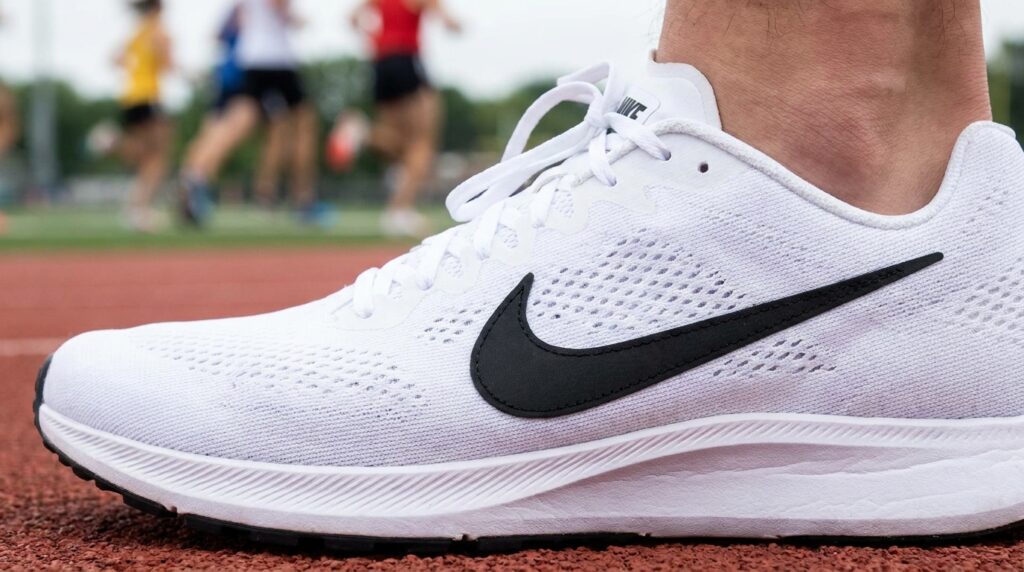
Nike publishes five core values on its careers page. Each one connects directly to how the company executes its mission and pursues its broader purpose.
Serve Athletes: Nike puts the athlete at the center of every decision. This value means that research, design, and marketing all begin with understanding what athletes need and feel. It connects to the mission’s promise of “every athlete.”
Create the Future of Sport: Nike commits to imagining what sport will look like in five, ten, or twenty years. This value drives the innovation half of the mission. It pushes teams to question assumptions and build products for problems that do not yet have solutions.
Be On the Offense Always: This value reflects a competitive mindset. It means Nike does not wait for trends to arrive. It tries to shape them. In the context of the mission, being on offense means constantly looking for new ways to inspire and new problems to solve.
Do the Right Thing: This value anchors Nike’s sustainability efforts and labor practices. It connects most directly to the vision of a sustainable planet and an equal playing field. It is the ethical floor beneath everything the company claims to stand for.
Win as a Team: Nike treats collaboration as a competitive advantage. Innovation does not happen in isolation. This value means that designers, engineers, marketers, and community teams must work together to deliver on the mission.
These five values operate as a system. Serving athletes sparks ideas. Creating the future demands innovation. Being on offense pushes speed. Doing the right thing sets boundaries. Winning as a team enables scale. When one value weakens, the whole system loses strength.
How Nike Lives Its Mission and Vision
Statements mean nothing without action. Nike has several verifiable examples where its mission and purpose are visible in real decisions.
The “Dream Crazy” campaign from 2018, featuring Colin Kaepernick, is a direct expression of the mission. The ad celebrated athletes who took risks and defied expectations. The tagline, “Believe in something, even if it means sacrificing everything,” captured the inspiration side of the mission. Nike chose a message that aligned with its values even when it was commercially risky. Sales rose in the aftermath, proving that authenticity has market power.
In product innovation, the Nike Forward material platform, launched in 2022, demonstrates the innovation commitment. It uses needle punched layers instead of traditional knit fleece. The process cuts the carbon footprint by an average of 75 percent compared to traditional methods. This is innovation that serves both the athlete, through lighter, warmer products, and the planet, through lower emissions. It connects the mission to the sustainability vision in one tangible product.
The “Made to Play” community initiative translates the universal athlete definition into action. Nike partners with local organizations to get kids moving, particularly girls and children in underserved communities. In FY21 alone, Nike directly reached nearly 600,000 kids worldwide, 55 percent of whom were girls. The company also donated 75,000 Nike Swoosh sports bras and 3,000 Nike Pro Hijabs to community partners, removing physical and cultural barriers to participation.
In 2025, Nike launched the “Why Do It?” campaign to reintroduce “Just Do It” to a new generation. The campaign redefines greatness as a choice rather than an outcome. It speaks to young athletes who may feel paralyzed by the pressure to be perfect. By framing starting as a victory in itself, Nike updates its inspirational message without abandoning its core identity. The campaign shows that living the mission sometimes means adapting how you say something while staying true to what you mean.
How Nike’s Mission and Vision Have Evolved
Nike was founded in 1964 as Blue Ribbon Sports by Phil Knight and Bill Bowerman. The company’s original focus was narrow: importing and selling high performance running shoes. The founding philosophy was practical and product focused. Bowerman and Knight believed better shoes could help athletes perform better. There was no grand statement about every body being athletic.
The “If you have a body, you are an athlete” line came from Bowerman, but the mission statement as a formal, public declaration emerged later as the company grew from a niche running brand into a global sportswear giant. The current mission wording has been consistent for at least two decades. What has evolved is how Nike interprets and applies it.
In the 1970s and 1980s, innovation meant better cushioning and lighter shoes. Today, it includes AI driven product personalization, sustainable materials, and digital fitness ecosystems. Inspiration once meant print ads and TV spots. Now it spans immersive brand experiences, athlete storytelling across social media, and community programs that create direct impact. The asterisk, which once felt like a clever philosophical footnote, has become central to Nike’s identity as a brand for everyone.
The purpose language has also grown more explicit. Early Nike did not talk about a healthy planet, active communities, or an equal playing field in official corporate statements. Those commitments reflect pressure from consumers, employees, and the broader market. They also reflect a genuine expansion of what Nike believes a sportswear company is responsible for. The mission stayed the same. The circle of responsibility around it got wider.
What Your Company Can Learn from Nike’s Statements
Nike’s mission is one of the most widely cited in business because it is short, clear, and actionable. Here are specific lessons you can apply.
Write a mission that anyone can remember. Nike’s mission is 12 words long, plus the footnote. You can say it in one breath. That is not an accident. A mission statement that requires a paragraph to explain will never stick. Cut every word that does not carry weight. When your team can recite the mission without looking, you have done the work.
Define your audience in a distinctive way. Nike could have said “athletes.” Instead, it said “every athlete” and then redefined the word entirely. This move is what makes the mission feel inclusive and unique. Your company can do something similar. Instead of describing your target market in generic industry language, define who you serve in a way only your brand would say it.
Separate your mission from your vision, but keep them connected. Nike’s mission explains what the company does. Its purpose and vision language explain what kind of world it wants to help create. This separation keeps the mission focused on actionable daily work while giving the organization a long term north star. When writing your own statements, do not try to pack everything into one sentence. Let the mission describe your role and the vision describe your desired impact.
The practical takeaway is this: mission statements work when they are specific enough to guide decisions and broad enough to allow growth. Nike’s statements pass both tests. That is the standard to aim for.
Frequently Asked Questions
Q: What is Nike’s current mission statement?
A: Nike’s official mission statement is “To bring inspiration and innovation to every athlete* in the world.” The asterisk leads to a footnote: “*If you have a body, you are an athlete.” This wording is published on Nike’s official help page and its corporate impact reports.
Q: Does Nike have a separate vision statement?
A: Nike does not publish a standalone official vision statement on its corporate website. However, the company uses a purpose statement (“Our purpose is to unite the world through sport to create a healthy planet, active communities, and an equal playing field for all”) and describes its vision in impact reports as creating a better world for all athletes that is inclusive, equitable, diverse, and sustainable.
Q: What is Nike’s tagline and how does it differ from the mission statement?
A: Nike’s famous tagline is “Just Do It,” introduced in 1988. The tagline is a marketing slogan designed to be memorable and emotionally resonant. The mission statement is a formal declaration of the company’s purpose and daily business focus. The tagline supports the mission by capturing the inspirational spirit of it in three words.
Q: How does Nike’s mission statement reflect its brand identity?
A: The mission reflects Nike’s identity as a brand for everyone, not just elite athletes. The footnote redefines “athlete” as any person with a body, which makes the brand feel inclusive. The pairing of inspiration and innovation captures Nike’s dual identity as a storytelling brand and a performance technology company.
Q: Has Nike’s mission or vision statement ever changed?
A: Nike’s formal mission statement has been stable for at least two decades. What has evolved is the company’s interpretation of it. The sustainability commitments, community investment goals, and inclusivity language have expanded significantly since the 2000s, adding more explicit purpose language around the core mission.
Q: What core values guide Nike?
A: Nike’s five published core values are: Serve Athletes, Create the Future of Sport, Be On the Offense Always, Do the Right Thing, and Win as a Team. These values appear on Nike’s careers page and guide how the company executes its mission and pursues its broader purpose.
Q: How does Nike put its mission into practice?
A: Nike puts its mission into practice through product innovation (such as the Nike Forward material platform), inspirational marketing (such as the “Dream Crazy” and “Why Do It?” campaigns), community programs like “Made to Play,” and sustainability efforts through the Move to Zero initiative. Each of these connects directly to the mission’s promise of inspiration and innovation for every athlete.
Final Thoughts
Nike’s mission statement endures because it is simple without being simplistic. Twelve words and a footnote tell you exactly what the company does and who it does it for. The vision, expressed through purpose language rather than a single sentence, describes a destination worth moving toward. The five core values act as the operating system that connects the two.
What these statements reveal about Nike is that the brand has a clear hierarchy of ideas. The mission is the daily work. The vision is the long bet. The values are the rules of engagement. That clarity is rare in large companies, and it is one reason Nike remains culturally relevant across generations. Strong statements do not guarantee success. But they do guarantee that when decisions get hard, the company knows what it is supposed to do.
What do you think of Nike’s mission and its broader purpose? Do the statements hold up against the company’s real world actions? Share your perspective in the comments below.
101 Mission Statements is for you if:
- You’re a leader or entrepreneur needing a clear, inspiring statement of intent for your business or nonprofit.
- You want your team and clients aligned with a shared vision of excellence and long-term goals.
- You need a step-by-step guide to craft a customized mission statement that acts as a blueprint for future success.
Be First to Comment