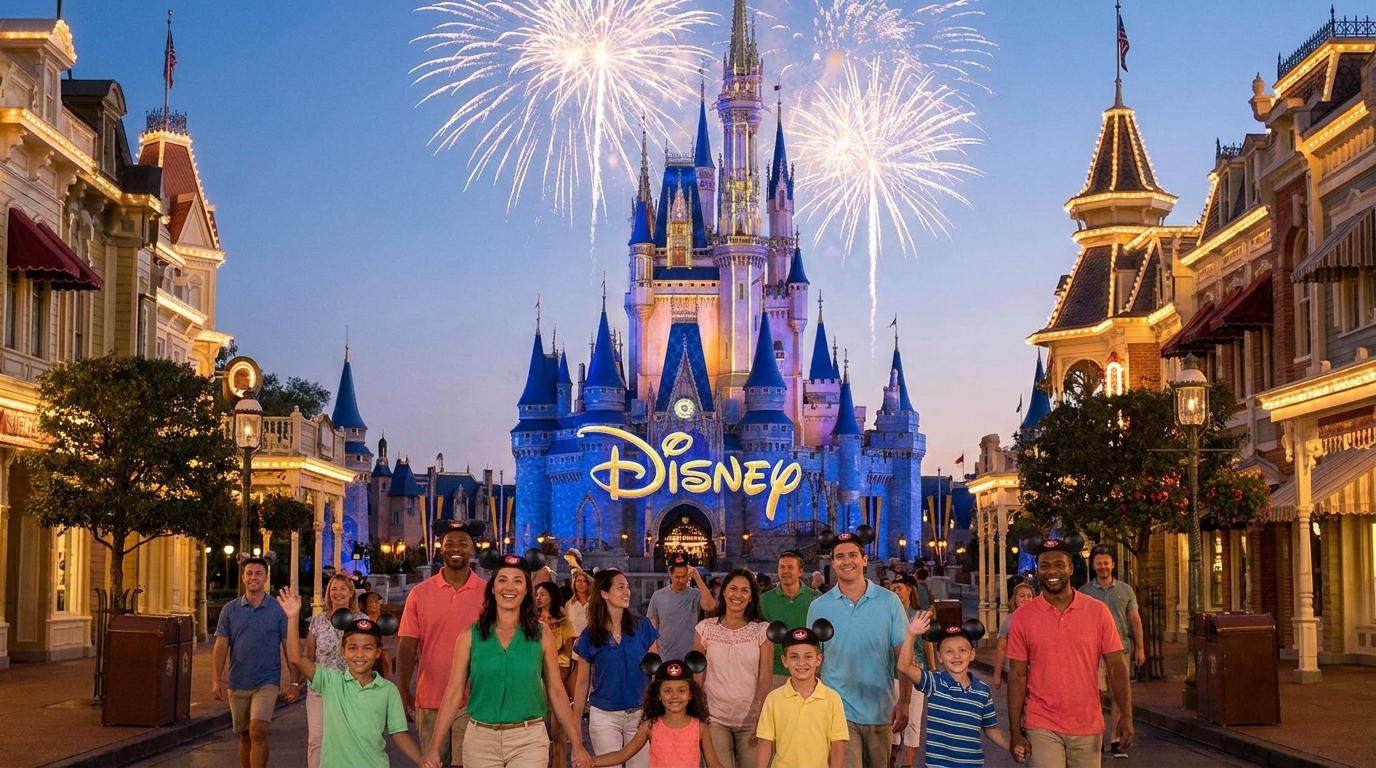
Most consumers can name Disney’s most famous characters in seconds. Yet behind the magic sits a set of corporate statements that shape every film, park experience, and business decision. A clear mission and a strong sense of forward direction explain why the company stays relevant across generations. Disney’s mission is to entertain, inform and inspire people around the globe through the power of unparalleled storytelling. The company does not publish a separate vision statement. Instead, its ultimate aim is woven directly into that mission: to be the world’s premier entertainment company.
These statements are not just words on a corporate page. They are the filter through which Disney launches streaming platforms, acquires storied franchises, and designs theme park lands. If you are a student of branding, a marketer, or an entrepreneur, understanding how Disney uses its mission as both a compass and a promise will help you sharpen your own strategic thinking.
What Is Disney’s Mission Statement?
The mission of The Walt Disney Company is to entertain, inform and inspire people around the globe through the power of unparalleled storytelling, reflecting the iconic brands, creative minds and innovative technologies that make ours the world’s premier entertainment company.
Disney’s mission is remarkably direct for a company its size. It names three actions: entertain, inform, and inspire. Entertain comes first because that is the core transaction. People buy tickets, stream shows, and visit parks to escape into a story. Inform acknowledges that Disney owns networks like National Geographic and ABC, which educate and report. Inspire is the emotional payoff. It promises that a Disney experience leaves you with something lasting, whether that is a new dream or a fresh perspective.
The back half of the statement explains how the company delivers on those verbs. It leans on three assets: iconic brands (Marvel, Pixar, Star Wars, Disney Animation), creative minds (writers, imagineers, animators), and innovative technologies (streaming infrastructure, park ride systems, CGI). Together they build what Disney calls “the world’s premier entertainment company.” The phrasing is competitive and confident. It signals that the mission is not just about making content. It is about leading the category.
101 Mission Statements is for you if:
- You’re a leader or entrepreneur needing a clear, inspiring statement of intent for your business or nonprofit.
- You want your team and clients aligned with a shared vision of excellence and long-term goals.
- You need a step-by-step guide to craft a customized mission statement that acts as a blueprint for future success.
What Is Disney’s Vision Statement?
Disney does not publish a separate official vision statement. The company’s forward-looking ambition lives inside its mission. The final clause, “the world’s premier entertainment company,” operates as the directional statement. That short phrase captures where Disney intends to go and how it wants to be seen.
Think of it this way: the mission tells you what Disney does daily. The vision, embedded right there, tells you what success looks like in the long run. It is not enough to be a large entertainment company. Disney aims to be the premier one. That means dominating in quality, cultural impact, audience trust, and global reach. For employees and creative partners, it sets an expectation of excellence. For investors, it frames every acquisition and technology bet as a step toward that number one position. The absence of a standalone vision statement is actually a strategic choice. It keeps the company’s daily work and ultimate ambition fused into one clear idea.
Key Differences Between Disney’s Mission and Vision
| Aspect | Mission | Vision (Embedded in Mission) |
|---|---|---|
| Focus | What the company does: entertain, inform, inspire through storytelling. | Where the company wants to stand: as the world’s premier entertainment company. |
| Timeframe | Present and ongoing. It guides every movie, show, and park experience today. | Future-oriented. It describes the market position Disney aims to hold. |
| Primary Audience | Consumers, guests, viewers, and communities around the world. | The industry, shareholders, and internal leaders who define competitive strategy. |
| Core Question Answered | “What do we deliver and how?” | “What do we ultimately become?” |
| Purpose | Shapes daily creative and operational decisions. | Sets the long-term ambition and measures brand leadership. |
Both pieces are distinct but complementary. The mission keeps the company grounded in the craft of storytelling. The aspirational vision ensures that storytelling never becomes ordinary. Together they demand that Disney stay both creative and dominant.
Core Values Behind Disney’s Mission and Vision
Disney names six core values that support its mission and vision. They are not generic corporate ideals. Each one ties directly to how the company makes decisions and protects its brand.
Innovation: A commitment to pushing creative and technological boundaries. This value shows up in everything from the first synchronized sound cartoon to the real-time rendering in modern Disney attractions. It fuels the “innovative technologies” mentioned in the mission.
Quality: An insistence on high standards across every product and experience. When the mission promises “unparalleled storytelling,” quality is the mechanism that delivers it. It demands that a short film, a cruise ship restaurant, and a streaming interface all meet the same bar.
Storytelling: A belief that great stories are the foundation of the company. Storytelling is not just a creative preference. It is the operating system. It guides franchise development, marketing, and even the design of employee onboarding.
Decency: A promise to honor the trust that families place in the brand. This value protects the mission’s ability to inspire without alienating. It keeps humor, conflict, and drama within boundaries that feel welcoming to a broad audience.
Optimism: A point of view that hopeful narratives matter. Disney’s mission to inspire depends on optimism. It shapes endings, character arcs, and the tone of experiences so that people leave feeling better than when they arrived.
Community: A recognition that the company’s impact stretches beyond its walls. This value drives Disney’s conservation work, employee volunteerism, and inclusive storytelling. It connects directly to “people around the globe” in the mission.
Together these values form a system. Innovation and quality push the work forward. Decency and optimism protect the brand’s emotional connection. Storytelling and community ensure the mission stays human and relevant at scale.
How Disney Lives Its Mission and Vision
The launch of Disney+ in 2019 put the mission on full display. The platform gathered nearly the entire Disney, Pixar, Marvel, Star Wars, and National Geographic library in one place. That act alone screamed “premier entertainment company.” It delivered entertainment, information, and inspiration at a scale no competitor could match.
Theme park expansions like Star Wars: Galaxy’s Edge show the vision in physical form. The land does not just install rides. It builds a living story where every shopkeeper, food item, and architectural detail serves the narrative. Guests are not just visitors. They become characters inside a Star Wars adventure. That is the quality and storytelling the mission demands.
Disney’s acquisition strategy is another direct expression of its directional statement. Bringing Pixar, Marvel, and Lucasfilm into the company added iconic brands and creative minds that make “premier” a defensible claim. Each acquisition was evaluated not just on financials but on whether the studio’s storytelling culture and character library could strengthen Disney’s leadership position.
Beyond entertainment, the Disney Conservation Fund reflects the values of community and optimism. The fund has directed over $120 million to protect wildlife and habitats around the world. It allows the company to inspire not only through stories but through real-world action that reinforces its commitment to people and the planet.
How Disney’s Mission and Vision Have Evolved
The Walt Disney Company was founded in 1923. Walt Disney himself often summed up the company’s purpose with a simple phrase: “We make people happy.” That early ethos was personal, emotional, and tightly linked to Walt’s own creative vision. As the company expanded from a cartoon studio into theme parks, television, and a global media empire, a more formal corporate mission became necessary.
For many years, Disney’s official mission statement read closer to this: “To be one of the world’s leading producers and providers of entertainment and information.” The emphasis was on production and output. It reflected a company that saw itself as a maker of content first and a brand steward second. That framing made sense in an era when distribution channels were limited and Disney’s primary identity was a studio with a theme park division.
The shift to today’s mission, with its focus on storytelling, iconic brands, and being the premier entertainment company, marks a strategic pivot. It no longer frames Disney as one of many leading producers. It positions the company as the definitive leader. The change signals that Disney’s real asset is not just production capability. It is the ability to own and grow beloved stories across every platform and generation. This evolution accelerated under Bob Iger’s leadership, especially after the acquisitions that filled the mission’s “iconic brands” language with proof points. The mission moved from describing what the company does to capturing why it wins.
What Your Company Can Learn from Disney’s Statements
Disney’s approach offers practical lessons for any business that wants to write a mission and vision that actually guide behavior instead of sitting on a shelf.
Make your mission active, not abstract. Disney’s mission starts with three clear verbs: entertain, inform, inspire. Those words set a standard that teams can measure their work against. Your own mission should answer “what do we do?” with verbs a new hire can understand and an executive can enforce. Avoid nouns masquerading as actions. Get specific about the change you create for the people you serve.
Embed your vision where it cannot be ignored. Disney does not silo its ambition in a separate document. It hardwires “the world’s premier entertainment company” into the mission itself. If a separate vision statement feels disconnected from daily work, consider whether your mission can carry a clear forward-looking anchor. This ensures every strategy conversation connects directly to the long-term goal.
Name the assets that make you distinct. The mission does not just say Disney tells stories. It calls out iconic brands, creative minds, and innovative technologies. Those are not generic resources. They are competitive moats. When crafting your own statements, list the specific capabilities, talent, or IP that only your company can deploy. That forces clarity about what you actually protect and invest in.
Align your values so they become operational instructions. Disney’s six core values are not platitudes. Innovation and quality link directly to product standards. Decency and optimism guide creative tone. Your values should function the same way. Test each value by asking: if we fully lived this, what decision would we make differently next quarter? If a value cannot answer that question, refine it or drop it.
Let your mission justify big bets. The mission to be the premier entertainment company made the Disney+ investment and the major studio acquisitions logical, not reckless. A strong mission is a permission slip for the right risks. When your mission clearly states your desired market position, it becomes a tool for saying yes to bold moves and no to distractions.
Frequently Asked Questions
Q: What is Disney’s current mission statement?
A: Disney’s mission is to entertain, inform and inspire people around the globe through the power of unparalleled storytelling, reflecting the iconic brands, creative minds and innovative technologies that make ours the world’s premier entertainment company.
Q: Does Disney have a separate vision statement?
A: Disney does not publish a separate vision statement. The forward-looking ambition is embedded in the mission through the phrase “the world’s premier entertainment company,” which defines the brand’s long-term market position.
Q: What is Disney’s corporate tagline?
A: Disney does not use a single corporate tagline globally. Its most famous slogan is “The Happiest Place on Earth,” used for Disneyland, while “The Most Magical Place on Earth” is associated with Walt Disney World. Individual business segments often carry their own taglines.
Q: How does Disney’s mission statement reflect its brand identity?
A: The mission centers on storytelling as the brand’s core identity. It names entertainment, information, and inspiration as the three outputs, which mirrors how Disney spans movies, news, education, and theme parks while protecting a family-friendly, optimistic image.
Q: Has Disney’s mission or vision statement ever changed?
A: Yes. An earlier version of the corporate mission focused on being a leading producer and provider of entertainment and information. The current storytelling-centered mission, which raises the ambition to “premier” status, reflects the company’s evolution into a global intellectual property powerhouse.
Q: What core values guide Disney?
A: Disney’s official core values are innovation, quality, storytelling, decency, optimism, and community. They steer everything from creative development to guest experience and corporate responsibility efforts.
Q: How does Disney put its mission into practice?
A: Disney puts its mission into practice through major investments like the Disney+ platform, immersive theme park lands that tell complete stories, strategic acquisitions of brands such as Pixar and Marvel, and community programs like the Disney Conservation Fund. Each action reinforces the promise to entertain, inform, and inspire at scale.
Final Thoughts
Disney’s mission and embedded vision are remarkably compact for a company that touches billions of lives. The statement succeeds because it tells you exactly what the company does, how it does it, and where it intends to finish. Storytelling is not treated as a department. It is treated as the entire business model, protected by six values that keep quality and optimism in check.
The big lesson is not that your company should sound like Disney. It is that your mission must name the one thing you lead with and the one future you are chasing. When those two ideas live in the same sentence, your strategy gains a kind of clarity that most organizations never reach. What do you make of Disney’s approach to its mission and vision? Share your perspective in the comments.
101 Mission Statements is for you if:
- You’re a leader or entrepreneur needing a clear, inspiring statement of intent for your business or nonprofit.
- You want your team and clients aligned with a shared vision of excellence and long-term goals.
- You need a step-by-step guide to craft a customized mission statement that acts as a blueprint for future success.
Be First to Comment