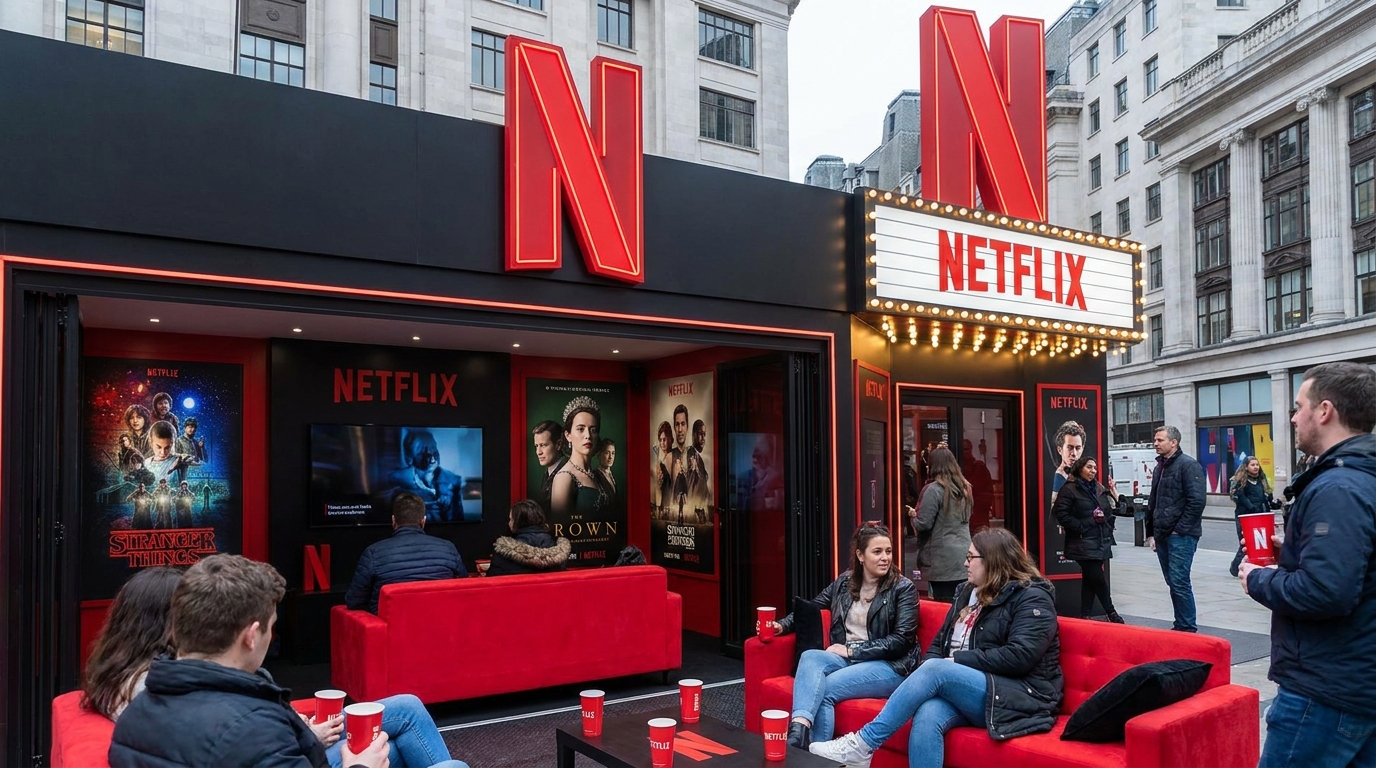
For any company operating at global scale, a mission and vision statement is more than a slogan on a website. It is the organizing logic behind every major decision: what to build, who to hire, and where to spend money. A vague statement signals a vague strategy. A sharp one signals clarity of purpose.
Netflix is one of the clearest examples of a company whose public-facing statements genuinely match its behavior. The mission statement of Netflix is simply: “To entertain the world.” The vision statement, as articulated in investor communications and official documents, is to become the most valued entertainment company for members, creators, and shareholders. Both statements are remarkably brief. Neither is padded with corporate language. And both have shaped decisions that range from a $18 billion content budget to a culture memo that treats rules as the enemy of creativity.
Understanding what these statements actually mean, and where they show up in the real world, is the goal of this analysis. The sections below break down each statement, compare the two, and pull out lessons that any brand builder can apply.
What Is Netflix’s Mission Statement?
“To entertain the world.”
Four words. That is the entire mission statement of Netflix, as confirmed by Co-CEO Ted Sarandos and reflected throughout the company’s official shareholder letters and SEC filings. In its quarterly earnings letters, Netflix describes its goal as “both simple and ambitious: to entertain the world.”
Plain language makes this statement easy to dismiss as too broad. But read it carefully. The word “entertain” rules out a lot of things Netflix could have said. It does not say “inform,” “educate,” or “connect.” Entertainment is the explicit product. The phrase “the world” is just as intentional. It rules out serving a niche. It sets a geographic and demographic scope that covers every country, language, and taste. Netflix operates in over 190 countries. That phrase is not aspirational decoration. It is a boundary condition that shapes which content gets funded and which markets get prioritized.
101 Mission Statements is for you if:
- You’re a leader or entrepreneur needing a clear, inspiring statement of intent for your business or nonprofit.
- You want your team and clients aligned with a shared vision of excellence and long-term goals.
- You need a step-by-step guide to craft a customized mission statement that acts as a blueprint for future success.
What Is Netflix’s Vision Statement?
“To become the most valued entertainment company for members, creators, and shareholders.”
Netflix does not publish a separate, formally titled vision statement in the way some companies do. The directional statement above is drawn from the company’s long-term investor communications and public statements, including its official Long-Term View document published through its investor relations site. It captures the forward-looking intent behind the company’s strategy.
The three-part audience in this statement is worth unpacking. Members come first because engagement drives every other metric. Creators come second because Netflix cannot entertain the world without the people who make the content. Shareholders come third, which signals that financial performance is treated as an outcome of the other two, not a goal to be chased independently. That ordering reflects how Netflix allocates capital. The company spent an estimated $18 billion on content in 2026, which only makes sense if you believe that winning with members and creators eventually produces shareholder value.
Key Differences Between Netflix’s Mission and Vision
Both statements work together, but they answer different questions. The table below separates them clearly.
| Dimension | Mission Statement | Vision Statement |
|---|---|---|
| Focus | What Netflix does every day | Where Netflix is heading long-term |
| Timeframe | Present and ongoing | Future state |
| Primary Audience | Members worldwide | Members, creators, and shareholders |
| Core Question Answered | What is our purpose? | What do we want to become? |
| Purpose | Defines the product and scope of service | Defines success and who it must serve |
The mission keeps Netflix grounded in the day-to-day reality of its business: making content that people want to watch. The vision keeps the company oriented toward a future in which it has earned the trust of every stakeholder, not just the subscriber paying a monthly fee. Together they form a self-reinforcing loop: entertain the world well enough, and the most valued company status follows.
Core Values Behind Netflix’s Mission and Vision
Netflix published an updated Culture Memo in June 2024, titled The Best Work of Our Lives, which names eight Dream Team values that define how people at the company are expected to behave. These are not generic traits copied from an HR handbook. They are specific behavioral expectations tied directly to the company’s mission.
- Judgment: Netflix expects employees to make smart decisions in ambiguous situations without waiting for permission. This directly supports a mission that operates across 190 countries with no single playbook for every market.
- Candor: Honest, direct feedback replaces corporate politeness. Netflix’s culture memo states that extraordinary candor helps the company improve faster, which matters when the goal is continuous improvement in entertainment quality.
- Courage: Employees are expected to challenge the status quo, voice disagreement, and risk failure in pursuit of better outcomes. This value explains bold bets like entering live sports broadcasting and gaming.
- Curiosity: Rapid, eager learning is expected at every level. Netflix’s culture memo notes that curiosity means being more interested in other people’s ideas than your own, which keeps the organization from becoming insular as it scales.
- Selflessness: Individual agendas take a back seat to what is best for Netflix. This keeps high-performance teams from fragmenting into competing internal factions.
- Inclusion: Netflix must reflect the world it claims to entertain. The company’s ESG materials state that entertaining an audience this global requires a company that reflects the world and the variety of stories it tells.
These six values function as a system. Courage without candor produces recklessness. Curiosity without judgment produces drift. Together, they create the conditions for a company that can actually execute a mission as ambitious as entertaining the entire world.
How Netflix Lives Its Mission and Vision
The clearest test of any mission statement is whether the company actually behaves in ways that are consistent with it. Netflix passes that test in several documented areas.
The company’s investment in non-English language content is the most direct evidence of the “world” in its mission statement. Non-English content made up more than half of Netflix’s catalog by 2024, and productions from South Korea, Spain, Brazil, and India have regularly appeared in the platform’s global top-ten lists. Squid Game, Money Heist, and Sacred Games were not accidents. They were the result of deliberate investment in local storytelling that could travel across borders.
Netflix’s move into live events reflects the vision of becoming the most valued entertainment company, not just the most popular streaming platform. The company began broadcasting live sports, including boxing matches and NFL games, as part of a strategy to reach audiences who had resisted subscription streaming. Getting value from non-subscribers is a different challenge from retaining existing ones. Netflix’s willingness to fund and build live production infrastructure signals how seriously it takes the breadth of “entertain the world.”
The company’s gaming expansion is another area where the mission shows up in practice. Netflix added mobile games to its subscription at no extra cost starting in 2021, and internal metrics showed user engagement with gaming rising significantly by 2025. Rather than launching a separate gaming service, Netflix embedded games into the existing product, consistent with a company that sees entertainment as a single, broad category rather than a set of separate silos.
Netflix’s hiring and culture philosophy also reflects its mission. The keeper test, a practice where managers ask whether they would fight to retain a given employee, is designed to maintain what the company calls “high talent density.” The logic is direct: you cannot entertain the world with average creative and technical execution.
How Netflix’s Mission and Vision Have Evolved
Netflix was founded in August 1997 by Reed Hastings and Marc Randolph in Scotts Valley, California. Its original purpose was practical and narrow: provide a more convenient way to rent movies by mail, free from the late fees and limited selection of brick-and-mortar video stores. The company launched its website in April 1998 and shifted to a subscription model in 1999. Entertaining the world was not part of the original plan. Surviving against Blockbuster was.
The shift to streaming in 2007 was the first signal that Netflix’s ambitions were expanding faster than its original business model. When the company introduced its first original series, House of Cards, in 2013, it stopped being a distributor and became a content creator. That move required a different mission, one that justified spending hundreds of millions of dollars on productions that no studio had greenlit. The phrase “to entertain the world” gave the company permission to make anything, for anyone, anywhere.
The most recent evolution is not in the wording of the mission, which has stayed short and stable, but in what it now includes. Entertainment in 2026 means series, films, games, and live events. In 2007, it meant streaming video. That quiet expansion of scope without a change in official wording is itself a strategic signal. The mission was written broadly enough to absorb the company’s next chapter before that chapter was fully written.
What Your Company Can Learn from Netflix’s Statements
Netflix’s mission and vision statements offer practical lessons for anyone working to sharpen their own brand’s direction.
Brevity is not the same as vagueness. Netflix’s mission is four words. But it is also specific enough to rule things out. Entertainment, not education. The world, not a segment. When writing your own mission, ask whether a competitor could claim the same words. If the answer is yes, keep editing.
Here are three additional takeaways:
- Let your audience list do the work. Netflix’s vision names members, creators, and shareholders in that order. The order signals priorities. If your vision statement lumps all stakeholders together without ranking them, it offers no guidance when trade-offs arise.
- Connect values to behaviors, not feelings. Netflix does not say it values “passion” and leave it there. Each value in its culture memo comes with behavioral definitions. “Courage” means you question actions inconsistent with values. “Candor” means you willingly give and receive feedback. Vague values do not change behavior. Behavioral definitions do.
- Keep the mission stable, let the strategy evolve. Netflix has expanded into gaming, live sports, and advertising without rewriting its mission. That stability signals confidence. Companies that change their mission statements frequently often signal strategic confusion, not strategic growth.
Frequently Asked Questions
Q: What is Netflix’s current mission statement? Netflix’s current mission statement is “to entertain the world.” It appears in SEC filings, investor letters, and was confirmed by Co-CEO Ted Sarandos in December 2025. The company describes entertainment as a basic human need, comparable to friendship in its importance to daily life.
Q: What is Netflix’s vision for the future? Netflix’s vision is to become the most valued entertainment company for members, creators, and shareholders. This statement appears in the company’s long-term investor communications and guides its decisions about where to spend capital and which markets to prioritize.
Q: Does Netflix have a separate tagline from its mission statement? Netflix does not maintain a widely publicized consumer-facing tagline in the traditional advertising sense. The phrase most closely associated with its brand positioning in recent years is “entertain the world,” which functions both as an internal mission statement and as a public description of company purpose.
Q: How does Netflix’s mission statement reflect its brand identity? The mission statement reflects Netflix’s commitment to breadth over niche. By targeting “the world” rather than a specific demographic, the brand has justified investment in Korean drama, Spanish thriller, Indian comedy, and American prestige TV alike. The identity is global by design, not by accident.
Q: Has Netflix’s mission or vision statement ever changed? The official wording of the mission has remained short and consistent for years, though Netflix’s earlier communications centered more on being a convenient rental service. The current “entertain the world” framing reflects a significant shift that began in earnest when Netflix started producing original content in 2013. The scope of what “entertainment” means has expanded over time to include games and live events.
Q: What core values guide Netflix? According to its June 2024 Culture Memo, Netflix’s Dream Team values are judgment, candor, creativity, courage, inclusion, curiosity, selflessness, and resilience. These sit under four broader principles: the Dream Team, People Over Process, Uncomfortably Exciting, and Great and Always Better.
Q: How does Netflix put its mission into practice? Netflix puts its mission into practice through large-scale investment in local-language content across more than 190 countries, expansion into gaming and live events, a high-talent culture designed to attract the best creative and technical talent, and a content budget that reached an estimated $18 billion in 2026.
Final Thoughts
Netflix’s mission and vision statements reveal a company that knows exactly what it is and what it is trying to become. The mission, four words, is specific enough to guide strategy and broad enough to survive the company’s own reinventions. The vision names all three stakeholder groups Netflix must win, and names them in the right order. The core values in its culture memo are behavioral, not decorative. That combination is rarer than it looks.
What do you think of Netflix’s mission? Does “to entertain the world” feel like a meaningful north star or too simple to be useful? Share your thoughts in the comments below. If you are working on your own mission or vision statement, the Netflix model is worth studying closely before you write a single word.
101 Mission Statements is for you if:
- You’re a leader or entrepreneur needing a clear, inspiring statement of intent for your business or nonprofit.
- You want your team and clients aligned with a shared vision of excellence and long-term goals.
- You need a step-by-step guide to craft a customized mission statement that acts as a blueprint for future success.
Be First to Comment