For a company that moves millions of people through the sky every day, a clear sense of purpose is not optional. It is a necessity. Mission and vision statements act as a compass when decisions carry enormous weight, from designing a new aircraft to responding to a safety crisis. They tell employees, customers, and the world what the brand stands for and where it intends to go.
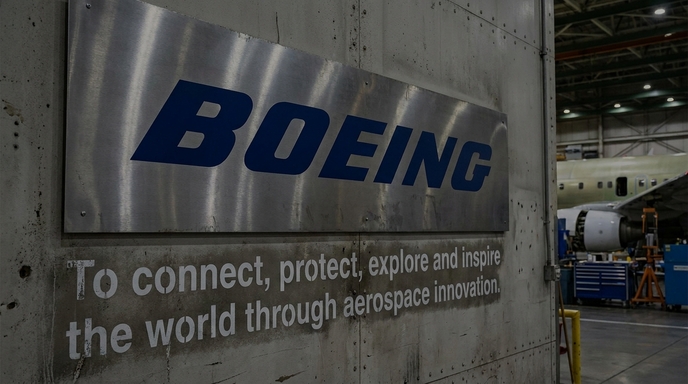
Boeing, one of the largest aerospace manufacturers on the planet, frames its entire identity around a single sentence. The company calls it a purpose, but it functions as a mission statement: “To connect, protect, explore and inspire the world through aerospace innovation.” That statement has stayed remarkably consistent for more than a decade, even as the company navigated profound turbulence.
What Boeing does not publish today is a separate, formal vision statement. The forward-looking ambition that once lived in a standalone vision now lives inside that same mission language and in the strategic goals the company sets publicly. This article unpacks what that means, how the mission works in practice, what core values support it, and what any organization can learn from Boeing’s approach.
What Is Boeing’s Mission Statement?
To connect, protect, explore and inspire the world through aerospace innovation.
Boeing places this purpose at the center of its brand. It is the opening statement on the company’s official About page, and executives repeat it in annual reports, press releases, and internal communications. The language is deliberately broad and deliberately active. Four verbs define what Boeing does and why it matters.
Connect means moving people and cargo across the globe, linking economies and cultures. Protect covers everything from national security through defense platforms to the safety of commercial flight. Explore captures space launch systems, satellites, and next-generation aircraft research. Inspire speaks to the human side of flight, the wonder that aviation creates and the talent pipeline Boeing tries to build through education and community investment. The phrase “aerospace innovation” anchors all four actions in the way Boeing competes: through engineering progress rather than price alone. This mission serves Boeing’s commercial airline customers, government and defense partners, space agencies, and the communities around its facilities. The values embedded are universal reach, technological ambition, safety, and a commitment to human progress.
What Is Boeing’s Vision Statement?
Boeing no longer publishes a separate vision statement. For years, the company did. Its official vision was “People working together as a global enterprise for aerospace industry leadership.” That language appeared in corporate materials through the 2010s and into the early 2020s. It focused on market position and collective effort, defining success as being the leader in the industry.
After the 737 MAX accidents, the pandemic, and a broader reset of Boeing’s priorities, the company stopped listing that vision. The website, the annual report, and the latest brand guidelines do not contain a standalone vision statement. Instead, directional energy comes from the mission purpose itself and from the strategic objectives Boeing sets each year. Phrases like “shaping the future of flight,” the tagline “Above and Beyond,” and public commitments to reach net zero carbon emissions by 2050 all signal where the company wants to go. For customers and employees, the message is this: Boeing intends to remain the defining aerospace company not by claiming leadership, but by proving it through safer, more sustainable, and more innovative work. The lack of a formal vision statement is a quiet but revealing choice. It shifts the focus from winning to earning trust.
Key Differences Between Boeing’s Mission and Vision
Even without an official vision statement, the distinction between Boeing’s mission and its implied directional ambition is clear. The table below maps that difference using the company’s public language and strategic behavior.
| Aspect | Boeing’s Mission (Purpose) | Boeing’s Directional Ambition (Implied Vision) |
|---|---|---|
| Focus | Why Boeing exists and what it does every day | Where Boeing wants to be in the long term |
| Timeframe | Ongoing, present tense | Future-oriented, 10 to 20 year horizon |
| Primary Audience | Customers, employees, passengers, communities | Investors, industry partners, regulators, society |
| Core Question Answered | What do we deliver to the world? | What kind of company will we become? |
| Purpose | Drive daily decisions, product design, and culture | Guide capital allocation, R&D roadmaps, and brand positioning |
Boeing’s mission grounds the organization in immediate value creation: connecting and protecting people now. The implied vision pulls leadership toward a desired future state: a resilient, trusted aerospace leader that has redefined safety and sustainability. Both are essential. Without the mission, the vision becomes hollow corporate messaging. Without a directional ambition, the mission risks becoming a maintenance slogan rather than a growth catalyst.
101 Mission Statements is for you if:
- You’re a leader or entrepreneur needing a clear, inspiring statement of intent for your business or nonprofit.
- You want your team and clients aligned with a shared vision of excellence and long-term goals.
- You need a step-by-step guide to craft a customized mission statement that acts as a blueprint for future success.
Core Values Behind Boeing’s Mission and Vision
Boeing revamped its corporate values in 2023, replacing a longer list with five direct, imperative phrases that directly reinforce the mission and the company’s recovery goals. Each value operates like a command, not a description.
Start with engineering excellence: Boeing builds its reputation on technical skill. This value demands that decisions be grounded in deep engineering knowledge, which directly fuels the “explore” and “innovation” pieces of the mission.
Be accountable: This value requires every employee to own their work and its outcomes. It connects to the “protect” element of the mission by making safety a personal responsibility, not just a policy.
Apply a safety and quality mindset: This is the most visible value after Boeing’s recent history. It puts safety and quality at the center of every action, linking directly to the promise to protect the flying public and the crews who operate Boeing aircraft.
Work together: Collaboration across teams, suppliers, and global partners is how Boeing delivers on “connect.” Complex aerospace programs cannot succeed in silos, and this value pushes for integrated teamwork.
Act with integrity: Integrity governs transparency with regulators, honest communication with customers, and ethical behavior inside the company. It reinforces the trust required to inspire anyone, whether a passenger or a young engineer considering a career in aerospace.
These five values operate as a system. Engineering excellence provides the capability. Accountability and a safety mindset ensure the capability is applied responsibly. Working together multiplies impact. Integrity wraps the entire operation in credibility. Together, they create the conditions the mission needs to be more than a slogan.
How Boeing Lives Its Mission and Vision
Boeing’s mission shows up in concrete, verifiable initiatives, not just in statements on a wall.
The ecoDemonstrator program takes existing Boeing aircraft and retrofits them with experimental technologies to reduce fuel burn, emissions, and noise. Dozens of real-world tests have advanced sustainable aviation fuel compatibility, recycled materials, and aerodynamic improvements. This is the “explore” and “protect” language in action, applied to commercial airplanes that will shape the industry for decades.
In 2023, Boeing launched the “Confident Travel” initiative in partnership with airlines, airports, and health experts. While rooted in pandemic recovery concerns, the program focused on restoring passenger trust in the entire flying experience. It blended safety data, cabin innovations, and transparent communication to make the “protect” and “connect” mission feel tangible to everyday travelers.
Boeing’s investment in STEM education extends the “inspire” part of the mission beyond the factory floor. The company directs millions of dollars each year into grants, university partnerships, and workforce development programs through the Boeing Foundation. Programs like the Boeing National Engineering Month activities and space camp scholarships give students from underrepresented communities a direct connection to aerospace careers.
After the 737 MAX grounding, Boeing held company-wide safety stand-downs and restructured its engineering and quality processes. The creation of the Chief Aerospace Safety Officer role and the embedding of safety review boards across programs showed that the “safety and quality mindset” value was being operationalized, not just posted on a website. These actions, though born of crisis, demonstrate that the mission to protect can demand painful internal change.
How Boeing’s Mission and Vision Have Evolved
Boeing was founded in 1916 by William E. Boeing in Seattle. The early focus was simple: build better airplanes. For much of the 20th century, the company’s identity was defined by engineering achievements like the 707, the 747, and the Apollo program contributions. Formal mission and vision language evolved as the company became a publicly traded global enterprise.
A significant shift happened in 2013. That year, Boeing launched a new brand campaign centered on the purpose “To connect, protect, explore and inspire the world through aerospace innovation” and a vision of “People working together as a global enterprise for aerospace industry leadership.” The tagline “Forever New Frontiers” accompanied the refresh. This dual-statement approach lasted nearly a decade.
By 2023, the leadership vision was retired. Boeing updated its values and leaned entirely on the purpose statement as the singular expression of identity and direction. The change coincided with a period where the company was focused less on claiming industry leadership and more on restoring operational stability, safety culture, and public confidence. The mission wording did not change, which signals that the core reason Boeing exists is durable. What changed was the supporting framework: fewer aspirational claims about market position, more concrete values about how the work must be done. The evolution reflects a company trying to mature from declaring ambition to earning the right to be ambitious again.
What Your Company Can Learn from Boeing’s Statements
Boeing’s approach to mission and direction offers practical lessons that any business leader or brand builder can apply. The takeaway is not to copy Boeing’s language but to understand the principles behind the choices the company made.
Make your mission active, not descriptive. Boeing’s purpose uses four strong verbs. It does not say “We are the world’s leading aerospace company.” It says what the company does for the world. An active mission gives employees a clear standard for daily work and tells customers what to expect. When you write yours, test it: can someone read it and immediately describe the actions your company takes?
Let your values do the heavy lifting when trust breaks. Boeing added “safety and quality mindset” and “be accountable” after a period of intense public scrutiny. A mission statement alone cannot rebuild credibility. Specific, measurable values that change behavior can. If your organization faces a reputational challenge, update the values first and make sure they are tied to operational changes, not just a memo.
You do not need a separate vision statement if your mission carries enough forward energy. Boeing’s purpose contains both present action and future intent. Explore and inspire naturally point toward what comes next. If your mission already signals the destination, forcing a separate vision statement can create redundancy. Clarity matters more than filling a template.
Stability in the core message is a strategic asset. Boeing kept its mission unchanged even through crisis, leadership turnover, and a global pandemic. That continuity signals to employees and customers that the fundamental purpose of the company did not break. Change what you must: values, processes, priorities. But preserve a mission that is still true unless the business itself transforms entirely.
Frequently Asked Questions
Q: What is Boeing’s current mission statement?
Boeing’s official mission, framed as its purpose, is “To connect, protect, explore and inspire the world through aerospace innovation.” This statement has been the company’s core identity since its introduction in 2013.
Q: What is Boeing’s vision for the future?
Boeing does not currently publish a separate vision statement. The company’s long-term direction is expressed through that same mission purpose and through public strategic goals like achieving net zero emissions by 2050 and restoring safety leadership.
Q: Does Boeing have a separate tagline from its mission statement?
Yes. Boeing’s current tagline is “Above and Beyond.” It serves as a brand expression of exceeding expectations, separate from the formal mission purpose that guides corporate strategy.
Q: How does Boeing’s mission statement reflect its brand identity?
The mission’s four verbs capture the full scope of Boeing’s commercial, defense, and space businesses. Connect and protect emphasize safety and global reach. Explore and inspire highlight innovation and the human meaning of flight, which have defined the brand for over a century.
Q: Has Boeing’s mission or vision statement ever changed?
The mission purpose has not changed since it was introduced. The company previously published a formal vision statement that focused on industry leadership. That vision was retired, and Boeing now relies on its mission purpose and updated values to communicate direction.
Q: What core values guide Boeing?
Boeing’s five core values are: Start with engineering excellence. Be accountable. Apply a safety and quality mindset. Work together. Act with integrity. These were refreshed in 2023 to align the company’s culture with its mission and recovery efforts.
Q: How does Boeing put its mission into practice?
Boeing translates its mission into action through programs like the ecoDemonstrator for sustainable technology testing, STEM education grants to inspire future talent, safety stand-downs and quality process reforms, and public transparency initiatives aimed at restoring passenger trust.
Final Thoughts
Boeing’s mission works because it is simple, active, and broad enough to cover everything from commercial jets to deep space exploration. The company made a deliberate choice to drop a separate vision statement and instead embed its aspirations into a single purpose that has survived extraordinary pressure. That clarity of purpose, paired with values that now emphasize accountability and safety above all else, shapes how Boeing operates today and how it plans for the years ahead.
The story of Boeing’s statements is not about clever copywriting. It is about an organization learning that the words it chooses must match the reality it creates. What do you think of Boeing’s focus on a single mission purpose over a traditional mission and vision pair? Share your perspective below.
101 Mission Statements is for you if:
- You’re a leader or entrepreneur needing a clear, inspiring statement of intent for your business or nonprofit.
- You want your team and clients aligned with a shared vision of excellence and long-term goals.
- You need a step-by-step guide to craft a customized mission statement that acts as a blueprint for future success.
Be First to Comment