Choosing a microSD card for your action camera or drone should be simple, but finding the right one can take more effort than expected. You need enough storage for your footage, reliable writing performance for continuous recording, and a card that works with your particular device.
The tricky part is that memory cards often advertise impressive speeds without explaining what those numbers actually mean for recording video. Buying the wrong card can lead to compatibility issues, interrupted recordings, or paying for performance your equipment cannot take advantage of.
We carefully researched the category, compared current product specifications, and selected five microSD cards suited to different recording needs. Our guide breaks down the features that matter, the limitations to watch for, and the differences between these options so you can choose a card that fits your camera, drone, and shooting habits.
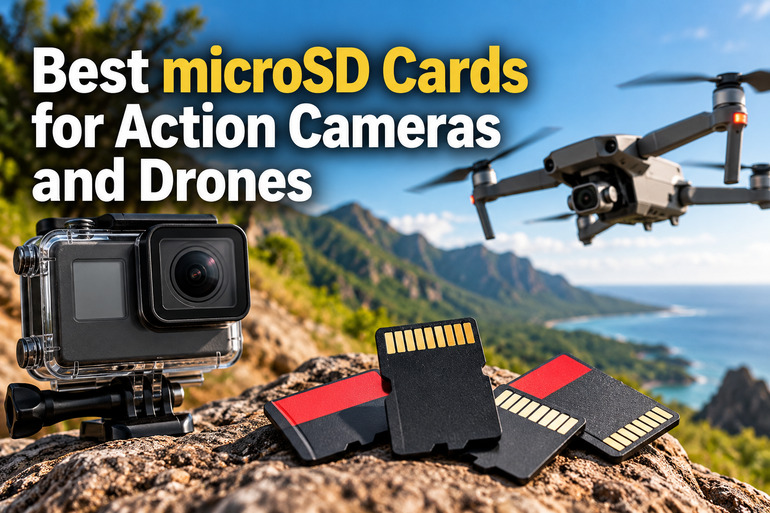
How We Selected the Best microSD Cards for Action Cameras and Drones
We focused on specifications that make a real difference when recording video, particularly sustained write performance, storage capacity, and device compatibility. Manufacturer documentation and official product listings guided our comparisons, helping us separate useful performance information from headline speed claims that may not reflect everyday recording conditions.
We also considered how each card might fit into your routine. A card that works well for occasional outdoor clips may not be the right choice for more demanding recording settings. Likewise, a high transfer speed is only useful when your equipment can take advantage of it.
-
Video recording performance: We looked at video speed ratings that help you identify cards suited to sustained recording, rather than relying on advertised peak speeds alone.
-
Storage capacity: We considered how much room each card provides for high-resolution footage and whether it can reduce the need for frequent transfers or card swaps.
-
Device compatibility: We checked published specifications and manufacturer guidance so you know what to verify before buying.
-
Transfer convenience: We considered how card speed and included accessories can make moving footage to your computer easier.
-
Build and durability: We reviewed documented environmental protections and warranty information where available, while keeping in mind that these features cannot eliminate the risk of data loss.
-
Practical limitations: We considered interface restrictions, package contents, and other details that could affect your experience.
These factors helped us narrow the field to five options worth considering for different recording needs. Let’s look at what each card offers and where it makes the most sense.
Best microSD Cards for Action Cameras and Drones
The right card depends on your recording settings, storage requirements, and equipment. Here are five options to consider, from versatile everyday cards to a higher-performance alternative for more demanding recording setups.
1. SanDisk 128GB Extreme microSDXC UHS-I Memory Card with Adapter
For creators who want a dependable everyday card for action-camera footage and compatible drone recording, the 128GB SanDisk Extreme is a practical place to start. Its capacity suits many routine shooting sessions, and the included full-size SD adapter makes it easier to transfer footage using a compatible card reader.
SanDisk’s official product specifications identify the Extreme family with UHS Speed Class 3 (U3) and Video Speed Class 30 (V30) ratings. These markings matter because they provide more useful information about sustained recording performance than maximum read speeds alone.
A V30 rating indicates a minimum sustained write speed of 30 MB/s under the applicable standard. That makes this card worth considering for compatible video-recording setups, although your camera’s requirements still determine whether it is suitable for your preferred resolution, frame rate, and bitrate.
The card also carries an A2 application-performance rating, which is more relevant to supported mobile applications than drone recording. For outdoor use, SanDisk documents durability features such as resistance to water, shock, temperature extremes, and X-rays. These protections are useful, but they do not guarantee that your footage will remain safe under every condition.
One thing to keep in mind is that advertised transfer speeds depend on your reader and host device. Before buying, confirm that your camera supports a 128GB microSDXC card and meets the card’s speed requirements. Formatting it in the camera according to the manufacturer’s instructions is also a sensible step before recording important footage.
Who should skip it:
-
Skip it if your camera requires a higher video speed class for your chosen recording settings.
-
Consider another capacity or format if your equipment does not support this card.
-
Look for more storage if you regularly record long sessions without transferring footage.
2. Transcend 128GB USD300S microSD UHS-I Card
The Transcend 128GB USD300S is worth considering if you need a straightforward card for everyday action-camera footage or compatible drone recordings. Its published specifications give you a useful starting point when sustained writing performance matters more than chasing the highest advertised transfer speed.
According to Transcend’s official product specifications, the 128GB model carries UHS-I U3 and V30 ratings, along with an A1 application-performance classification. Transcend lists sequential read and write speeds of up to 100 MB/s and 35 MB/s, respectively, for this capacity.
That combination makes the card a reasonable option for recording workflows that fit within its capabilities. The V30 designation indicates a minimum sustained video-writing requirement, while the stated maximum write speed offers another useful point of comparison. Actual results can vary with the recording device, host hardware, and operating conditions.
Transcend also documents environmental protections, including resistance to water, shock, X-rays, and static electricity. Its published operating-temperature range is -25°C to 85°C, and the product carries a five-year limited warranty. These details add useful context when evaluating a card for outdoor use, although they cannot guarantee protection against every type of damage or data loss.
The main limitation is its relatively modest stated maximum write speed compared with faster alternatives. We recommend checking your camera’s recording bitrate and minimum card requirements before settling on it. Also, pay attention to the exact model and package contents, since Transcend lists versions with and without a full-size SD adapter.
Who should skip it:
-
Skip it if your camera specifically requires V60 or another higher recording-speed class.
-
Consider a larger card if your typical shooting sessions involve lots of high-resolution footage.
3. SanDisk 256GB Extreme microSDXC UHS-I Memory Card
For drone pilots and action-camera users who regularly capture longer sessions, the 256GB SanDisk Extreme offers one obvious advantage: more room for footage before you need to transfer files. It is particularly useful to consider when swapping cards during an outing would interrupt your plans.
SanDisk’s official product documentation lists the Extreme family with UHS-I, U3, V30, and A2 classifications across the relevant capacities. For video recording, the U3 and V30 markings deserve the most attention because they relate to sustained writing performance rather than simply promising fast file transfers.
The extra capacity can come in handy when filming high-resolution clips, recording several flights, or waiting until you return home to offload your footage. However, actual recording time depends on your resolution, frame rate, bitrate, and camera settings. We would not estimate how long the card will last based on capacity alone.
SanDisk also documents environmental protections for its Extreme cards, including resistance to water, shock, temperature extremes, and X-rays. Those features are useful for equipment that travels outdoors, but they are not a substitute for backing up valuable footage. A damaged, lost, or corrupted card can still cost you important recordings.
The main limitation is that more storage does not automatically improve recording quality or prevent dropped frames. Your camera must support the card’s capacity and recording requirements, and advertised transfer speeds depend on compatible host hardware. Before buying, check the exact card version and your device’s maximum supported capacity, then format the card in the camera according to its instructions.
Who should skip it:
-
Skip it if your camera supports only a lower maximum card capacity.
-
Choose a higher video speed class if your recording settings require one.
-
Consider 128GB if you regularly transfer files and prefer working with smaller batches of footage.
4. Kingston Canvas Go! Plus 128GB microSD Card
The Kingston Canvas Go! Plus is a worthwhile option for action-camera owners and drone pilots who want a card designed around portable content capture. Its 128GB capacity accommodates many everyday shooting sessions, while its published specifications cover both sustained video recording and file transfers.
Kingston’s official product page identifies the current SDCG4 generation with UHS-I, U3, V30, and A2 classifications. For the 128GB model, Kingston lists maximum sequential read and write speeds of up to 200 MB/s and 100 MB/s, respectively.
The V30 rating is the more useful specification when judging sustained video-recording suitability. The higher advertised read speed may help when moving footage to a compatible computer, but achieving the maximum transfer performance requires suitable hardware. A fast card cannot overcome the limitations of a slower reader or host device.
Kingston specifically positions the Canvas Go! Plus for drones and action cameras. There is also model-specific compatibility guidance: Kingston’s 128GB Canvas Go! Plus appears on DJI’s recommended-card list for several drone models. That is reassuring if you own one of those devices, but it does not mean the card works with every drone.
The main consideration is that advertised transfer speeds depend on compatible hardware and connection standards. We recommend checking the exact package contents, matching the card to your device’s compatibility list, and formatting it in your camera before recording anything important. These simple checks can help you avoid unpleasant surprises during a shoot.
Who should skip it:
-
Skip it if your equipment does not support the card’s capacity or format.
-
Look for another option if your recording setup requires a higher sustained video speed class than V30.
5. ProGrade Digital microSD Card V60 (128GB), Tested for Full-Size SD Card Devices
For creators using compatible equipment with more demanding recording requirements, the ProGrade Digital V60 128GB card offers a higher sustained-writing classification than typical V30 options. It is worth considering when recording performance is a priority and you may also want to use the card with compatible cameras that accept full-size SD cards through an adapter.
ProGrade’s manufacturer datasheet lists maximum read speeds of up to 250 MB/s and write speeds of up to 130 MB/s. More importantly, its V60 classification indicates a minimum sustained recording rate of 60 MB/s under the applicable standard.
The card uses a UHS-II interface and carries U3 and Class 10 classifications. Its included full-size SD UHS-II adapter can also make it useful with compatible cameras that have standard SD slots. To get the expected transfer performance, however, your reader and other hardware must support the relevant interface.
ProGrade’s published specifications also describe error correction, wear-leveling, shock and X-ray resistance, and a three-year warranty. These features offer useful context when comparing storage for valuable footage, but they cannot eliminate the risk of damage or lost files. We would still recommend making regular backups and checking the current warranty terms before purchasing.
The biggest consideration is compatibility. Many action cameras and drones specify UHS-I cards with V30 ratings, so a V60 card may offer little practical benefit if your equipment cannot take advantage of its higher performance. Check the SD Association’s speed-class guidance alongside your camera maker’s approved-card list to make sure this option suits your setup.
Who should skip it:
-
Skip it if your device does not support the card type or recording mode you need.
-
Avoid paying for UHS-II performance if your equipment cannot use it.
-
Consider a V30 card if it already meets your camera’s documented requirements.
Final Thoughts
When choosing a microSD card, start with your camera or drone’s supported capacities, sustained video speed requirements, and compatibility guidance. Maximum read speeds can help when transferring files, but they should not distract you from the specifications that determine whether a card is suitable for continuous recording.
We recommend choosing enough storage for your usual shooting sessions and checking the manufacturer’s guidance before placing an order. Match the card to your equipment and workflow instead of automatically chasing the highest specifications. Most importantly, back up valuable footage regularly so your best recordings do not depend on a single memory card.
Be First to Comment