Mission statements are easy to dismiss as corporate fluff. But for a company as large as Procter & Gamble, they serve as a practical compass. With over 100,000 employees and brands like Tide, Pampers, and Gillette, a clear set of guiding statements is not optional.
P&G’s mission is often expressed through its Purpose statement: to provide branded products and services of superior quality and value that improve the lives of the world’s consumers. The company also operates with a formal vision: to be, and be recognized as, the best consumer products and services company in the world.
This article breaks down exactly what those words mean. You will also see how P&G’s statements have evolved, where they show up in real business decisions, and what you can learn from them for your own organization.
What Is Procter & Gamble’s Mission Statement?
We will provide branded products and services of superior quality and value that improve the lives of the world’s consumers, now and for generations to come. As a result, consumers will reward us with leadership sales, profit and value creation, allowing our people, our shareholders and the communities in which we live and work to prosper.
This statement does three things at once. First, it defines what P&G sells: branded products and services. That might sound obvious, but it signals a focus on familiar names like Tide and Crest instead of unbranded generic goods.
Second, it sets a standard. Quality and value must be superior. That is a high bar, and it forces every product team to compete against the best in each category, not just against the company’s own past performance.
Third, and most importantly, the mission connects daily business decisions to a broader human outcome. Improving lives is the goal. The commercial results, like leadership sales and profit, are framed as a reward. This order of operations matters. P&G does not set out to make money first. It sets out to solve consumer problems, and the money follows.
Notice the phrase “now and for generations to come.” That is a deliberate shift from short term thinking. It pushes product development toward sustainability and long term value, not just quarterly earnings. In practice, this shows up in efforts like reducing packaging waste and sourcing raw materials responsibly.
101 Mission Statements is for you if:
- You’re a leader or entrepreneur needing a clear, inspiring statement of intent for your business or nonprofit.
- You want your team and clients aligned with a shared vision of excellence and long-term goals.
- You need a step-by-step guide to craft a customized mission statement that acts as a blueprint for future success.
What Is Procter & Gamble’s Vision Statement?
Be, and be recognized as, the best consumer products and services company in the world.
P&G’s vision statement is short. That is unusual for a company of its size, where many competitors publish paragraphs of aspirational language. But brevity here is a strength.
The statement contains two distinct parts. First, P&G wants to be the best. That means building superior products, employing top talent, and running efficient operations. Second, the company wants recognition for that achievement. Recognition from customers, competitors, and industry analysts matters because it validates that P&G is not just claiming excellence. It is proving it.
This vision does not mention specific products or markets. That flexibility allows P&G to enter new categories, divest underperforming brands, and adapt to changing consumer habits without rewriting its long term goal. The company’s 2014 decision to drop about 100 brands and focus on 65 core ones was a direct move toward becoming the best in fewer categories rather than being average in many.
What Is Procter & Gamble’s Purpose Statement?
We will provide branded products and services of superior quality and value that improve the lives of the world’s consumers, now and for generations to come. As a result, consumers will reward us with leadership sales, profit and value creation, allowing our people, our shareholders and the communities in which we live and work to prosper.
At P&G, the purpose statement is the mission statement. The company treats them as one and the same. Throughout official materials like the Purpose, Values, and Principles (PVP) framework, this single block of text serves as both the guiding purpose and the operational mission.
This integration simplifies communication. Employees do not have to memorize two separate documents. They learn one purpose statement and apply it daily. The company reinforces this through its Values and Principles, which break down how to act on the purpose in real situations.
The purpose statement also answers a key question that many mission statements ignore: why does the company exist beyond making money? For P&G, the answer is improving lives through superior products. The profit and shareholder return are outcomes, not the reason for being.
Key Differences Between Procter & Gamble’s Mission and Vision
| Focus | Products, quality, and consumer impact | Competitive position and industry standing |
| Timeframe | Present to future (now and for generations) | Aspirational future state |
| Primary Audience | Employees, consumers, and communities | Investors, competitors, and industry analysts |
| Core Question Answered | What do we do every day and why? | What do we ultimately want to become? |
| Purpose | Guide daily operations and product development | Set the competitive target and measure success |
The mission explains the work. The vision explains the prize. Neither works without the other. The mission gives employees a clear job description with a meaningful why. The vision gives everyone a finish line to aim for. When a brand manager at P&G decides to reformulate a laundry detergent, the mission demands superior quality that improves lives. The vision demands that the resulting product helps P&G gain recognition as the best in the world.
Core Values Behind Procter & Gamble’s Mission and Vision
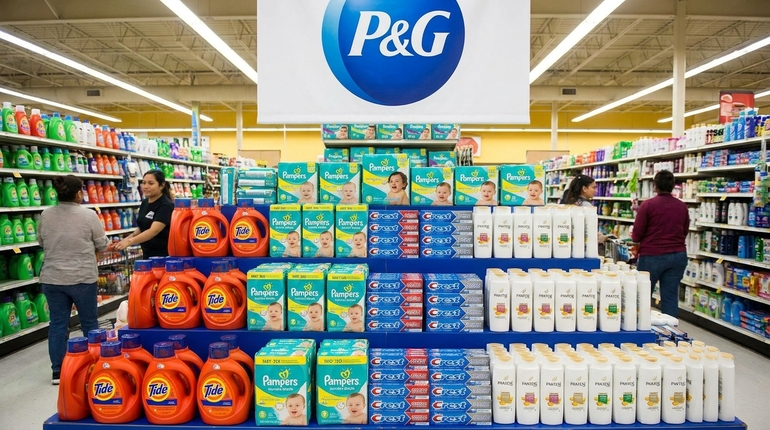
P&G publishes five core values that tie directly to its mission and vision. These values appear in every official PVP document and set behavioral expectations for employees.
-
Integrity: The company always tries to do the right thing, operates within the letter and spirit of the law, and upholds P&G’s values in every action and decision. This supports the mission by ensuring that improving lives never comes through shortcuts or ethical compromises.
-
Leadership: Every employee is a leader in their area of responsibility, with a deep commitment to delivering leadership results. This value turns the vision of being the best into a personal expectation for each worker.
-
Ownership: Employees accept personal accountability, treat company assets as their own, and act with long term success in mind. Ownership prevents bureaucracy and pushes decision making down to the people closest to the consumer.
-
Passion for Winning: P&G people are determined to be the best at what matters most. They maintain a healthy dissatisfaction with the status quo and a desire to win in the marketplace. This value directly fuels the vision of industry recognition.
-
Trust: Employees respect colleagues, customers, and consumers, and treat them as they want to be treated. Trust enables speed, because teams do not waste time second guessing each other’s intentions.
These values operate as a system. Integrity without ownership creates ethical passivity. Leadership without passion leads to complacency. Trust without leadership results in politeness without progress. P&G demands all five working together.
How Procter & Gamble Lives Its Mission and Vision
The P&G Children’s Safe Drinking Water program shows the mission in action. Since 2004, the company has used its water purification technology to deliver clean drinking water to communities in need. The program has provided over 25 billion liters of clean water across more than 100 countries. That is not charity disconnected from business. It is a direct application of the mission to improve lives using P&G’s core product expertise.
The Tide Loads of Hope program demonstrates how a specific brand can embody the company’s purpose. Launched after Hurricane Katrina, mobile laundry units offer free cleaning services to families affected by natural disasters. The program has provided clean clothes to tens of thousands of people, turning a daily chore into an act of recovery and dignity.
P&G’s Ambition 2030 sustainability goals push the mission into environmental action. The company aims to reduce emissions, eliminate packaging waste, and restore water in stressed regions. These goals extend the “for generations to come” part of the mission from a nice idea into measurable targets.
The company’s portfolio streamlining in 2014 reflected the vision. P&G dropped about 100 brands to focus on the 65 that could truly be the best. That was a painful process involving layoffs and divestitures. But it was a direct acknowledgment that being recognized as the best requires saying no to many good things.
How Procter & Gamble’s Mission and Vision Have Evolved
P&G was founded in 1837 by William Procter, a candlemaker, and James Gamble, a soap maker. For the first century, the company did not have a formal mission statement in the modern sense. It had a reputation for quality and a profit sharing program introduced in 1887, which aligned worker and owner interests long before that was common practice.
The formal Purpose, Values, and Principles framework emerged in the late 20th century as P&G expanded globally. The wording has been refined over time, but the core elements of superior quality, consumer focus, and long term thinking have remained constant for decades.
The biggest shift in recent years is the addition of concrete sustainability targets to the mission. The phrase “for generations to come” used to feel abstract. Now it is backed by specific 2030 and 2040 goals for carbon emissions, water use, and packaging. This evolution reflects pressure from consumers and investors, but it also flows naturally from P&G’s original emphasis on improving lives. You cannot improve lives for generations if you destroy the environment in the process.
What Your Company Can Learn from Procter & Gamble’s Statements
Keep the vision short enough to memorize. P&G’s vision is nine words. An employee can recall it instantly. Long vision statements get ignored. Write a vision that fits on a sticky note.
Put the human outcome before the financial result. Notice how P&G’s mission describes profit as a reward for improving lives, not as the primary goal. That ordering changes how employees prioritize decisions. Your mission should answer “who benefits?” before it answers “how do we get paid?”
Build a values system, not a list. P&G does not just publish five values. It publishes detailed Principles that explain how to apply each value in daily work. A list of nice words without behavioral guidance is useless. For every value you claim, write two or three specific actions that demonstrate it.
Use the mission to make hard choices easier. P&G dropped 100 brands because those brands could not be the best in their categories. That decision was painful, but the mission and vision provided clarity. If your mission and vision do not help you say no to good opportunities, they are not specific enough.
Frequently Asked Questions
Q: What is Procter & Gamble’s current mission statement?
A: P&G’s mission is to provide branded products and services of superior quality and value that improve the lives of the world’s consumers, now and for generations to come. The company treats this as both its purpose and its operational mission.
Q: What is Procter & Gamble’s vision for the future?
A: P&G’s vision is to be, and be recognized as, the best consumer products and services company in the world. This short statement focuses entirely on market leadership and external validation of that leadership.
Q: Does Procter & Gamble have a separate tagline from its mission statement?
A: Yes. P&G uses “Touching lives, improving life” as a tagline in some communications, but the official purpose statement is the primary guiding document. The tagline is a marketing phrase, not a strategic framework.
Q: How does Procter & Gamble’s mission statement reflect its brand identity?
A: The mission emphasizes branded products, superior quality, and consumer value. That matches P&G’s identity as a company of major brands like Tide, Pampers, Gillette, and Crest. The mission also highlights long term thinking, which fits a company that has operated for more than 180 years.
Q: Has Procter & Gamble’s mission or vision statement ever changed?
A: The core wording has been stable for decades, but the interpretation has evolved. Sustainability commitments under “for generations to come” have become more specific and measurable in recent years. The company has also clarified that the purpose statement serves as the mission.
Q: What core values guide Procter & Gamble?
A: P&G’s five core values are Integrity, Leadership, Ownership, Passion for Winning, and Trust. Each value is supported by detailed behavioral principles that explain how employees should act in specific situations.
Q: How does Procter & Gamble put its mission into practice?
A: Examples include the Children’s Safe Drinking Water program, the Tide Loads of Hope disaster relief laundry service, and the Ambition 2030 sustainability goals. Each initiative directly applies product expertise to improve lives, just as the mission requires.
Final Thoughts
Procter & Gamble’s mission and vision statements are unusually grounded for a company of its size. The mission focuses on specific actions and outcomes. The vision sets a clear competitive target without drifting into vague aspirations. Together they create a framework that has guided the company through wars, depressions, and industry disruptions for nearly two centuries.
What stands out most is the integration. The mission, values, and principles all reinforce each other. An employee cannot claim to follow the mission while ignoring the values. A leader cannot pursue the vision without applying the principles. That internal consistency is rare and worth studying.
Do you think P&G’s mission is too focused on products and not enough on broader social impact? Or does the product first approach make the mission more actionable? Share your perspective in the comments below.
101 Mission Statements is for you if:
- You’re a leader or entrepreneur needing a clear, inspiring statement of intent for your business or nonprofit.
- You want your team and clients aligned with a shared vision of excellence and long-term goals.
- You need a step-by-step guide to craft a customized mission statement that acts as a blueprint for future success.
Be First to Comment