For large companies, a mission statement is not just a line on a website. It is a promise to the world about what the company does and why it exists. A vision statement tells you where the company is headed. Together, they give employees, investors, and customers a clear picture of the organization’s priorities.
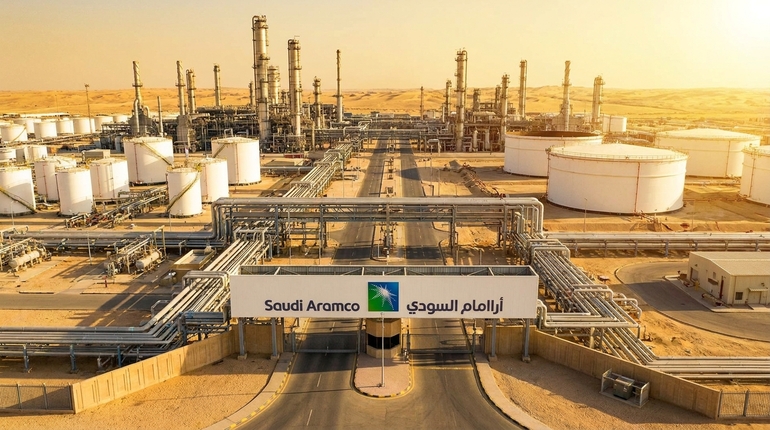
Saudi Aramco, the world’s largest oil company, takes both seriously. Its mission is to reliably supply energy to the Kingdom of Saudi Arabia and the world while maximizing the value of the country’s hydrocarbon resources. Its vision, as stated in the company’s official sustainability and corporate communications, is “to be the world’s preeminent integrated energy and chemicals company, operating in a safe, sustainable, and reliable manner.”
These two statements are not empty marketing. They reflect nearly a century of corporate evolution, national responsibility, and a deliberate push into new energy territory. The sections below break down what each statement means, how they differ, and what the company actually does to back them up.
What Is Saudi Aramco’s Mission Statement?
“Today, we continue to deliver on our core mission of reliably supplying energy to the Kingdom and the world, and continue to progress towards becoming the world’s leading integrated energy and chemicals enterprise, a top refiner and a creator of energy technologies.”
This mission statement does two things at once. First, it reaffirms a long-standing commitment: reliable energy supply. That word “reliably” is doing real work here. For a company that produces roughly 12 million barrels of oil equivalent per day, reliability is not aspirational language. It is an operational standard.
Second, the statement signals ambition beyond crude oil. The phrase “integrated energy and chemicals enterprise” tells you that Aramco is not content to be just an oil extractor. The company is explicitly positioning itself as a refiner and a creator of energy technologies. That is a meaningful expansion of scope, and it shapes where Aramco spends its capital.
101 Mission Statements is for you if:
- You’re a leader or entrepreneur needing a clear, inspiring statement of intent for your business or nonprofit.
- You want your team and clients aligned with a shared vision of excellence and long-term goals.
- You need a step-by-step guide to craft a customized mission statement that acts as a blueprint for future success.
What Is Saudi Aramco’s Vision Statement?
“To be the world’s preeminent integrated energy and chemicals company, operating in a safe, sustainable, and reliable manner.”
The vision is compact and specific. “Preeminent” is a strong word. It does not mean “one of the best.” It means the best. That level of ambition sets a high internal standard and signals to global markets that Aramco is not managing a slow decline in fossil fuels. It is competing for long-term leadership across the full energy value chain.
The three operating principles attached to the vision, namely safe, sustainable, and reliable, are not decorative. They represent the conditions under which Aramco says it will pursue that leadership. The inclusion of “sustainable” is particularly significant for a company in the hydrocarbon business. It points directly at the company’s net-zero Scope 1 and Scope 2 emissions ambition by 2050, and its investments in lower-carbon technologies such as blue hydrogen and carbon capture.
Key Differences Between Saudi Aramco’s Mission and Vision
Both statements point in the same direction, but they serve different functions. Here is how they compare:
| Dimension | Mission Statement | Vision Statement |
|---|---|---|
| Focus | Current operations and core energy supply responsibility | Long-term market leadership and sustainable energy integration |
| Timeframe | Present (what the company does today) | Future (where the company is headed) |
| Primary Audience | Governments, customers, employees, and the Kingdom of Saudi Arabia | Investors, global markets, and the broader energy industry |
| Core Question Answered | What do we do and for whom? | What do we want to become? |
| Purpose | Define operational commitment and scope | Set the direction for long-term strategic investment |
The mission grounds Aramco in its current reality: an energy supplier with a national mandate. The vision lifts that reality into a forward-looking aspiration. Neither statement makes sense without the other. The mission explains the foundation; the vision explains the building being constructed on top of it.
Core Values Behind Saudi Aramco’s Mission and Vision
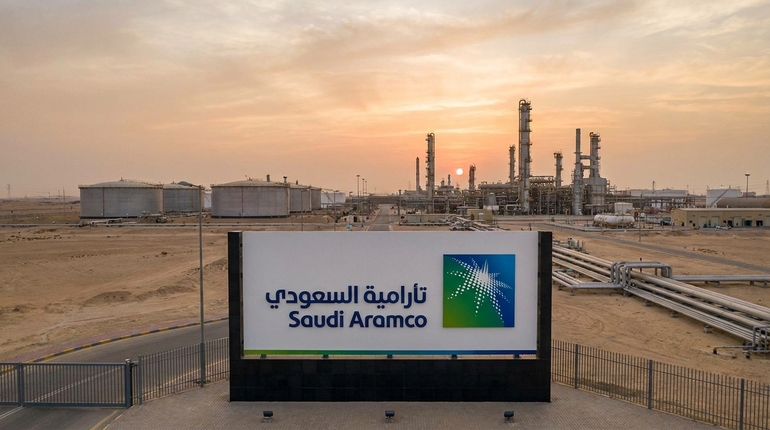
Aramco publicly anchors its operations around five corporate values, stated plainly on its official website.
- Safety: Every worker and contractor operates under a zero-incident mindset, backed by formal safety management systems across all Aramco fields and facilities. This value is foundational because the company’s operations involve inherently high-risk environments.
- Citizenship: Aramco holds itself accountable to the communities in which it operates. The most visible expression of this is the iktva program, which drives local economic development inside Saudi Arabia by prioritizing in-Kingdom suppliers and job creation.
- Integrity: Transparent financial reporting and consistent ethical conduct define how Aramco presents itself to regulators, investors, and the public. As a publicly listed company since 2019, this value carries direct legal and governance weight.
- Accountability: Aramco expects its people and its leadership to own their decisions and results. This connects directly to the mission, where “reliably supplying energy” leaves no room for excuses when performance falls short.
- Excellence: The company pursues high operational efficiency and continually invests in research and technology to improve its performance across exploration, refining, and chemicals. This value ties most directly to the vision of becoming the world’s preeminent integrated energy company.
These five values function as a system. Safety and integrity protect the company’s license to operate. Citizenship and accountability root it in its national and stakeholder obligations. Excellence drives the ambition embedded in the vision.
How Saudi Aramco Lives Its Mission and Vision
Aramco’s strategic decisions over the past decade show a company that is genuinely working to close the gap between its stated direction and its actual behavior.
The iktva program, launched in 2015, is one of the clearest expressions of the citizenship value and the mission’s focus on benefiting the Kingdom. By early 2026, the program had reached its 70% local content target, meaning 70% of Aramco’s procurement spending now goes to in-Kingdom suppliers. Since its inception, iktva has added an estimated $280 billion to Saudi Arabia’s GDP and supported the creation of more than 200,000 direct and indirect jobs.
On sustainability, Aramco announced its net-zero ambition in 2021, pledging to eliminate or offset all Scope 1 and Scope 2 greenhouse gas emissions from its wholly-owned operations by 2050. That is a decade ahead of the Saudi government’s own 2060 national target. The company has also set an interim 2035 target and is investing in blue ammonia production with a goal of 11 million metric tons per year by 2030.
Aramco’s downstream expansion reflects the mission’s language about becoming a “top refiner.” The company owns the Motiva refinery in Port Arthur, Texas, the largest single-site crude oil refinery in North America, and has expanded its global chemicals footprint through joint ventures and acquisitions in Asia and Europe. These are not passive investments. They are direct expressions of the vision to become a leading integrated energy and chemicals enterprise.
The company’s investment in research through Aramco’s own R&D network and technology partnerships further supports the “creator of energy technologies” component of the mission. In 2024, Aramco maintained its Maximum Sustainable Capacity at 12 million barrels per day and redirected investment capital toward gas, chemicals, and lower-carbon technology, signaling that the vision is actively influencing capital allocation decisions.
How Saudi Aramco’s Mission and Vision Have Evolved
Aramco began in 1933 as a concession between the Kingdom of Saudi Arabia and Standard Oil of California. The original company, CASOC, had one purpose: find and extract oil from the Saudi desert. Its first major success came in 1938 with the Dammam No. 7 well, known as the Prosperity Well. The mission at that stage was purely extractive.
After the Saudi government took full ownership of the company in 1980 and formally established Saudi Aramco in 1988, the corporate identity shifted. The company was no longer a foreign-operated concession. It was a national asset, and its mission expanded accordingly to include maximizing value for the Kingdom’s citizens, not just producing barrels.
The most significant evolution came after 2016, when Saudi Arabia launched its Vision 2030 national reform plan under Crown Prince Mohammed bin Salman. Aramco’s own strategic language shifted in step. The company began explicitly framing itself as an integrated energy and chemicals enterprise, not just an oil producer. The 2019 IPO on the Saudi Exchange accelerated this shift by introducing global investors and international governance expectations. Today’s mission and vision reflect that evolved identity: a nationally rooted company with global ambitions in a rapidly changing energy market.
What Your Company Can Learn from Saudi Aramco’s Statements
Aramco’s statements offer practical lessons for any organization trying to write or sharpen its own mission and vision.
- State your ambition clearly, and use specific language. Aramco’s vision uses the word “preeminent,” not “leading” or “top-tier.” Precision signals commitment. Vague language lets everyone interpret the goal differently. When writing your own vision, choose a word that forces accountability.
Here are three additional takeaways:
- Anchor your mission in what you actually do today. Aramco’s mission starts with “reliably supplying energy,” which is exactly what the company does every day. A mission statement that describes a future state or an aspiration, rather than a current operating commitment, confuses employees and customers alike. Start with present-tense reality.
- Let your values do operational work, not just decorative work. Aramco’s five values are all connected to real programs, behaviors, and performance metrics. If your company’s values are not tied to anything measurable or behavioral, they are not values. They are slogans.
- Evolve your statements as the business evolves. Aramco did not keep a 1988 mission statement in a world where energy transition, sustainability, and chemicals integration are reshaping its industry. Your mission and vision should reflect the company you are building, not the company you were.
Frequently Asked Questions
Q: What is Saudi Aramco’s current mission statement? Aramco’s current mission is to reliably supply energy to the Kingdom of Saudi Arabia and the world while progressing toward becoming the world’s leading integrated energy and chemicals enterprise, a top refiner, and a creator of energy technologies. This reflects both its core operational purpose and its strategic growth direction.
Q: What is Saudi Aramco’s vision for the future? Aramco’s official vision is “to be the world’s preeminent integrated energy and chemicals company, operating in a safe, sustainable, and reliable manner.” This points to long-term global leadership across oil, gas, refining, and chemicals, while embedding sustainability as a non-negotiable operating condition.
Q: Does Saudi Aramco have a separate tagline from its mission statement? Aramco does not publish a widely recognized consumer-facing tagline in the way that consumer brands do. Its brand identity is built around its corporate values and its status as the world’s largest integrated energy company. The phrase “Energy to fuel ambition” has appeared in some marketing contexts, but it is not an official mission-level statement.
Q: How does Saudi Aramco’s mission statement reflect its brand identity? The mission ties Aramco’s identity to two things: national responsibility (serving the Kingdom of Saudi Arabia) and global ambition (becoming the world’s leading integrated energy and chemicals enterprise). That dual identity, state-owned champion and international energy major, shapes everything from its governance structure to its investor communications.
Q: Has Saudi Aramco’s mission or vision statement ever changed? The specific wording has evolved significantly. The original company mission in 1933 was purely extractive: find and produce oil. After full Saudi government ownership in 1980 and the formal establishment of Saudi Aramco in 1988, the mission expanded to include value creation for Saudi citizens. The current language about chemicals, refining, and energy technologies reflects shifts that took hold after Saudi Vision 2030 was announced in 2016 and accelerated after the IPO in 2019.
Q: What core values guide Saudi Aramco? Aramco operates under five officially stated core values: safety, citizenship, integrity, accountability, and excellence. These are published on the company’s website and are reflected in its operational programs, governance practices, and community investment initiatives.
Q: How does Saudi Aramco put its mission into practice? Three concrete examples stand out. First, the iktva program delivers on the “benefit to the Kingdom” component by localizing supply chains and creating Saudi jobs. Second, the net-zero Scope 1 and Scope 2 commitment by 2050 backs the “sustainable” language in the vision. Third, Aramco’s downstream expansion into refining and chemicals, including sole ownership of North America’s largest single-site refinery, directly executes the “integrated energy and chemicals enterprise” goal in the mission.
Final Thoughts
Saudi Aramco’s mission and vision statements reveal a company managing a careful balance. On one side sits a near-century-old mandate to produce and supply oil for the Kingdom and the world. On the other sits a forward-looking ambition to lead in integrated energy, chemicals, and sustainable operations. What makes Aramco’s statements worth studying is that they are not just aspirational text. The iktva program, the net-zero commitment, the downstream acquisitions, and the capital reallocation decisions all trace back to the language in those statements.
What do you think of Saudi Aramco’s mission and vision? Do they hold up as more than corporate language, or do you see gaps between the stated direction and the company’s actual choices? Share your perspective in the comments below.
101 Mission Statements is for you if:
- You’re a leader or entrepreneur needing a clear, inspiring statement of intent for your business or nonprofit.
- You want your team and clients aligned with a shared vision of excellence and long-term goals.
- You need a step-by-step guide to craft a customized mission statement that acts as a blueprint for future success.
Be First to Comment