A heavy DSLR with a long telephoto lens can expose weak points in a tripod, head, or mounting plate. Even a support that looks sturdy online may be hard to balance when the lens extends far forward. Tripod guidance explains why balance matters.
Shopping is tricky because a headline load rating does not tell the whole story. Head design, leg stiffness, center-column position, mounting compatibility, and portability all affect how a tripod handles your gear.
We researched current manufacturer listings, compared published capacities and designs, and selected five options for different heavy-lens workflows. Our guide explains where each tripod makes sense, which limitations deserve attention, and how to choose a support that fits your camera, lens, and shooting style.
How We Selected the Best DSLR Camera Tripods for Heavy Lenses
We checked current manufacturer listings for payload, height, head type, construction, and included hardware. Then we compared how each design suits still photography, video, travel, or overhead work, giving priority to clear specifications over broad marketing language.
Capacity figures alone can mislead when a lens is long or mounted off-center. We therefore considered head compatibility, column geometry, portability, and whether an extra head or adapter may be needed to complete the setup.
-
Rated capacity: Keep your complete camera, lens, plate, and head within the published limit.
-
Head and plate: Compatible hardware helps you lock a heavy setup down without slipping.
-
Leg construction: Tube strength and secure locks matter, especially near maximum height.
-
Column design: A raised or horizontal column adds leverage to a heavy setup.
-
Shooting style: Ball, three-way, and fluid heads suit different still and video workflows.
-
Portability: Folded length, carry weight, and included accessories affect the kit you need.
These options cover different needs without assuming every photographer carries the same rig. Next, we look at the strongest fit for each type of work.
Best DSLR Camera Tripods for Heavy Lenses
The products below prioritize portability, video movement, overhead composition, studio flexibility, or a substantial support platform. For a long telephoto, match the complete rig to the head and mounting point, not just the legs.
1. NEEWER 66″/168cm Carbon Fiber Camera Tripod with 360° Ball Head
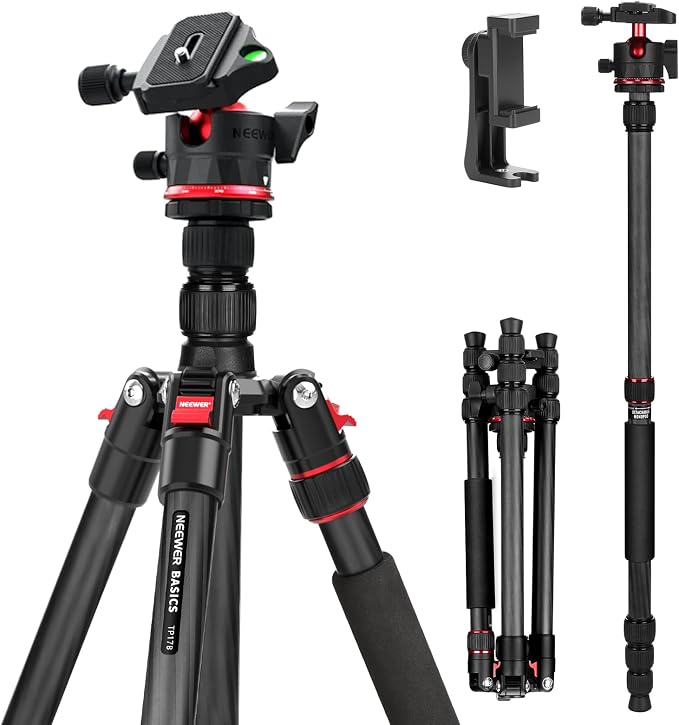
Photographers carrying a DSLR and substantial zoom between locations may appreciate the NEEWER N55C’s carbon-fiber construction. Its official specifications list 66 inches of maximum height, four leg sections, and a stated 12 kg load rating for heavier rigs.
The head specifications describe 360-degree panning and up to 90-degree tilt for landscape, portrait, panoramic, or overhead shots. A quick-release plate speeds camera changes, while the inverted center column supports low-angle compositions close to the ground.
The design can also convert to a monopod, which may appeal if you move between locations or want a more mobile support option. The current listing gives a folded length of about 49 cm and includes a carrying bag, so storage is straightforward.
The 12 kg rating is a maximum, not a guarantee of sharp images with long lenses. NEEWER’s telephoto note says a separate tripod mount ring may be needed. A lens collar can reduce torque on the head, as tripod guidance explains.
Set the legs on firm ground, lock every section, and keep the center column low, following tripod setup guidance. Check the plate and head before releasing the camera. We see this as a portability-first choice, not a specialist platform for the largest super-telephotos.
Who should skip it:
-
Photographers using very large telephotos who need a rigid, specialist support system for long sessions in the field.
-
Buyers whose lens requires a separate collar or plate but expect every mounting accessory to be included in the box.
2. NEEWER 79″/200cm Video Tripod, Heavy Duty Aluminum Alloy Camera Tripod
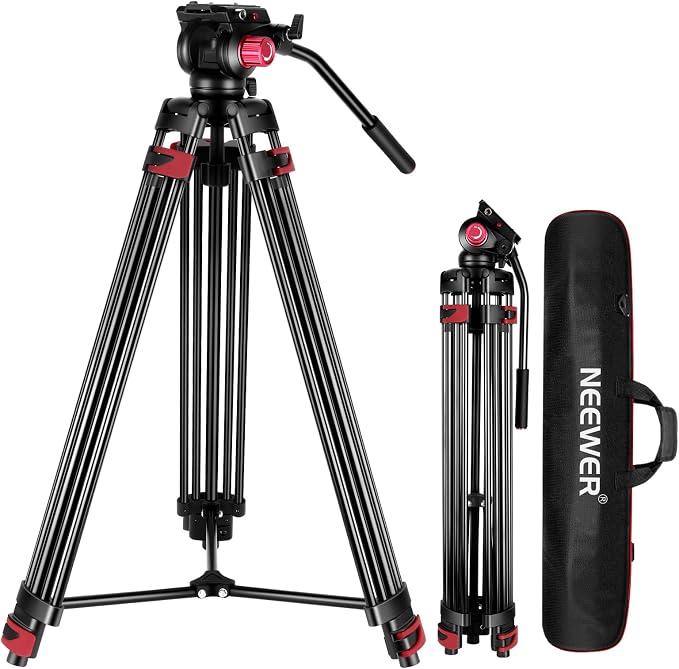
The NEEWER 79-inch video tripod suits photographers and small production teams using heavier DSLR rigs for interviews, events, or controlled panning. The manufacturer’s specifications list an aluminum-alloy frame, 200 cm height, and 8 kg maximum load, with video movement in mind on location.
The head specifications list 360-degree panning and -70 to 90-degree tilt for controlled video movement. A 70 mm bowl base helps level the head, while the bubble level provides a quick reference before recording on uneven ground and adjusting framing.
The published dimensions confirm three sections and a weight around 4.5 kg. Flip locks and a carrying bag simplify setup and transport after shoots, while the quick-release plate uses standard 1/4-inch and 3/8-inch camera screws for common DSLRs and camcorders.
For heavy-lens work, the fluid head is most useful when you need deliberate motion rather than quick wildlife reframing. Its published 8 kg limit is lower than several heavy-duty supports, so count the camera, lens, plate, and accessories together.
Spread the legs on a stable surface, use the bowl base to level the head, and check all locks before panning, following setup guidance. With a long lens, avoid maximum height when stability matters; keeping the rig low makes it easier to control.
Who should skip it:
-
Still photographers who need rapid, one-handed reframing more than fluid video movement.
-
Anyone whose complete setup approaches or exceeds the 8 kg limit.
-
Photographers regularly tracking wildlife who need faster, more flexible head movement.
3. K&F CONCEPT 90″/230cm Ultra High Horizontal Overhead Camera Tripod
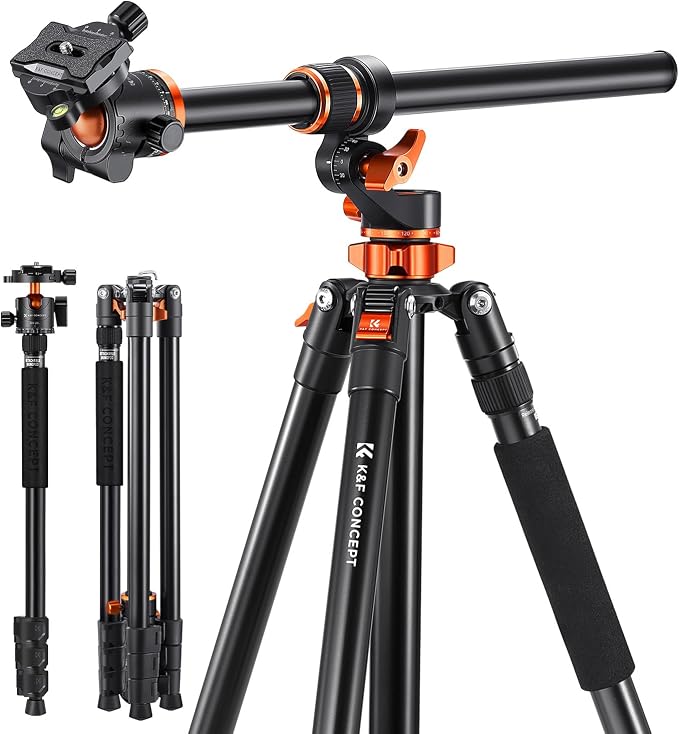
The K&F Concept overhead tripod suits studio creators, product photographers, and DSLR users needing high camera positions or top-down framing. The official listing gives a 230 cm maximum height, a 10 kg rating, and a transverse center column.
The ball-head details specify 360-degree panoramic rotation, while the center column extends horizontally to position a camera above a table or subject. That can help with product photos, craft demonstrations, or tutorial footage without placing tripod legs around the subject.
Its tripod dimensions list a four-section aluminum-alloy design weighing about 2 kg and folding to roughly 54 cm. A detachable monopod adds another configuration when a full tripod is inconvenient, while the stated 10 kg head capacity helps with load planning.
Overhead shooting introduces leverage because the camera sits away from the tripod center. We would not assume the 10 kg headline rating applies equally to a fully extended horizontal arm; the published details give no separate load rating for each arm position.
Use it overhead only after checking the rig is secure. With a long telephoto, keep the arm retracted or vertical, spread the legs carefully, and confirm the lens collar and plate fit, following tripod guidance. Its flexibility needs care under load.
Who should skip it:
-
Wildlife photographers prioritizing a rigid support for a very large telephoto lens.
-
Anyone who needs a simple, no-adjustment tripod without a transverse column or detachable parts.
-
Owners of costly long lenses who prefer a support with a specifically published arm-position load rating.
4. Manfrotto 055 Aluminum 3-Section Tripod Kit with Horizontal Column
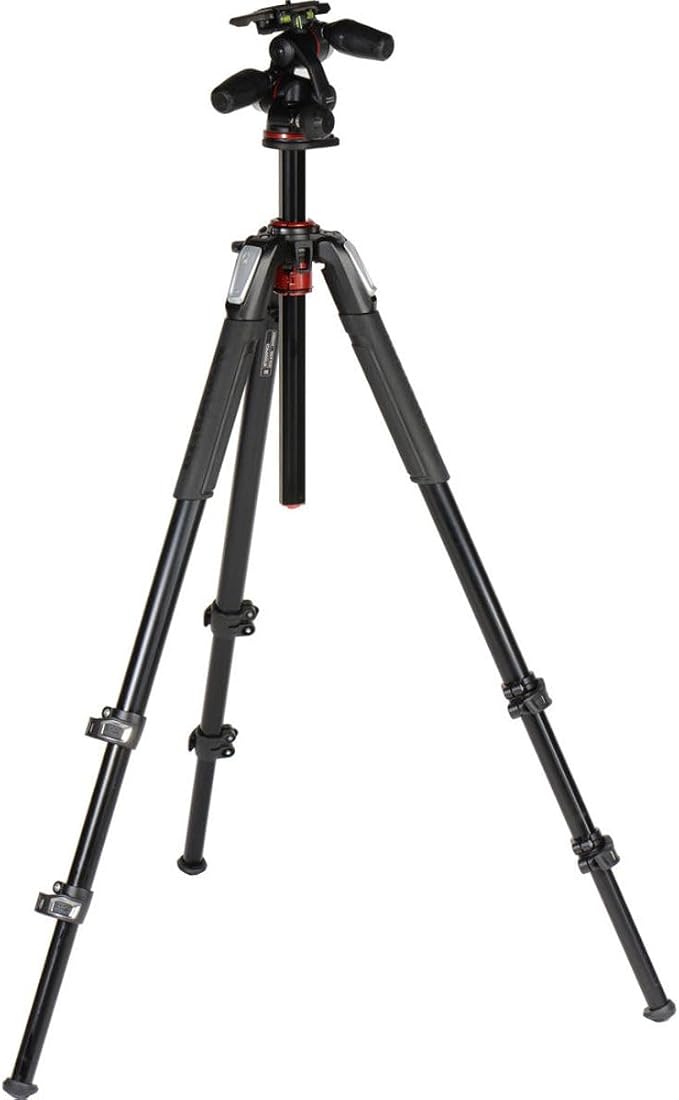
The Manfrotto 055 kit suits studio photographers and DSLR users who value controlled framing and accessory expansion. The official kit specifications list 183 cm maximum height, a 3.5 kg weight, and a 12 kg safety payload for the three-way-head version.
The feature list describes a center column that moves horizontally for close-up, tabletop, or product shots. Quick Power Lock levers speed adjustments, while the Easy Link connector can support compatible lights or reflectors on suitable accessories.
The included three-way head offers independent controls for framing axes, while friction controls help you adjust before locking the camera. The full specifications list a 74 cm folded length and no carrying bag, so the kit is well-equipped but bulky.
Following tripod mounting guidance, keep the column vertical and lowered when stability matters, and use a lens collar when available. A horizontal column is convenient but should not be the default for a long, heavy lens because the offset increases leverage.
This kit is most appealing when positioning and accessory support matter more than minimizing weight. Its 12 kg safety payload refers to the full tripod-and-head kit, so compare the complete rig with that limit instead of a bare-leg rating.
Who should skip it:
-
Travelers who need a lightweight tripod with a short folded length for frequent backpacking.
-
Photographers who need carbon fiber or a video-oriented fluid head instead of the included three-way head.
-
Users wanting a compact support that is quick to pack for frequent location changes.
5. INNOREL RT90C Carbon Fiber Heavy Duty Bowl Tripod
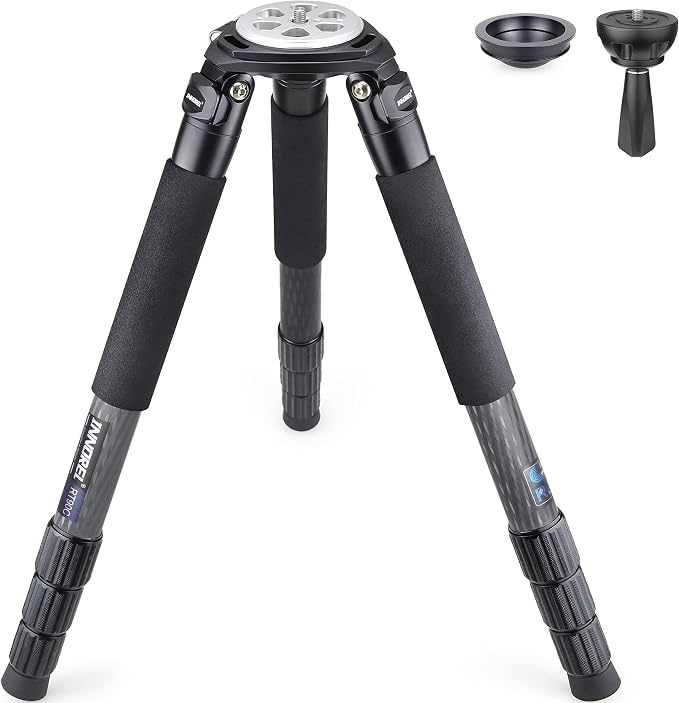
The INNOREL RT90C suits wildlife photographers and DSLR users needing a heavier-duty base for a long lens, gimbal, or compatible fluid head. Its official specifications list a 40 kg maximum load, 160 cm height, and carbon-fiber tubes up to 40 mm.
Its published specifications describe four-section legs, three angle positions, a weight around 2.72 kg, and a folded length near 59 cm. Its 160 cm height suits photographers who prefer working with the center column low.
This is a bowl-style support, not necessarily a complete ready-to-shoot kit. The Amazon listing identifies a 75 mm bowl adapter, while INNOREL’s current configurations vary; a compatible head may still be separate. Check package contents and verify head compatibility before ordering.
The 40 kg figure is the manufacturer’s maximum, not a promise of stability with every head, lens, or angle. The large tubes suit heavier rigs, but the head, bowl interface, plate, and lens mount must all support the same setup.
Confirm the bowl adapter and head are seated and locked, spread the legs on solid ground, and balance the camera at its lens collar when available. INNOREL’s warranty terms state two-year coverage for official purchases, but warranty protection does not replace checking compatibility.
Who should skip it:
-
Buyers who want a complete tripod-and-head kit without checking which adapter or head is included.
-
Photographers who need a working height well above its listed 160 cm maximum.
-
Users who require a raised center column in the package, since the compatible column is sold separately.
Final Thoughts
For heavy lenses, prioritize a compatible head and plate, a realistic capacity margin, and a setup that remains rigid without relying on an extended center column. When your lens has a tripod collar, check whether the tripod hardware supports mounting through it.
Choose based on your camera-and-lens combination, carrying distance, and whether you mainly shoot stills, video, or overhead compositions. Before mounting valuable gear, verify the kit contents and lock every connection. Stable support starts with matching every component to the job.
Be First to Comment