Mixing music requires headphones that help us hear details clearly, balance instruments, and identify problems that might otherwise slip through. However, choosing the right pair can be challenging when studio headphones differ in sound presentation, isolation, comfort, and suitability for different recording environments.
The wrong choice can make mixing decisions harder, especially when you’re working in a home studio without properly treated monitoring speakers. Closed-back headphones can help control sound leakage during recording, while open-back designs offer a different listening experience for focused mixing. Understanding these differences makes choosing a suitable pair much easier.
We researched the current models, examined manufacturer specifications, and compared five studio monitor headphones with distinct strengths. Our guide explains what each option offers, where its limitations lie, and which working environments suit it best, helping you select headphones that fit your mixing needs rather than relying on specifications alone.
How We Selected the Best Studio Monitor Headphones for Audio Mixing
We focused on features that meaningfully affect mixing accuracy, recording convenience, and long-session usability. Our evaluation considered official manufacturer documentation and the practical differences between headphone designs, rather than assuming that higher specifications automatically produce better mixes.
We also considered the needs of home producers, recording musicians, audio editors, and more experienced engineers. Because these headphones serve different purposes, we assessed their strengths relative to their intended use instead of treating every design as interchangeable.
-
Sound presentation: We considered how each model is positioned for detailed listening, frequency evaluation, and identifying potential mixing problems.
-
Isolation and leakage: Your choice matters when recording near a microphone or working in a shared room.
-
Comfort: Weight, ear-pad design, ventilation, and headband construction can influence your experience during extended sessions.
-
Connectivity: We examined cable arrangements, connectors, and impedance to help you check compatibility with your audio equipment.
-
Durability and maintenance: Replaceable ear pads, detachable cables, and practical construction can influence long-term ownership.
-
Studio versatility: We considered whether a headphone is suitable for tracking, mixing, mastering, or a combination of tasks.
These five models offer useful options across different studio workflows. We recommend matching their characteristics to your recording environment and listening habits before making a final decision.
Best Studio Monitor Headphones for Audio Mixing
Our recommendations cover closed-back headphones for recording and flexible everyday studio work, alongside semi-open and open-back alternatives for focused listening in quieter environments.
1. Audio-Technica ATH-M50X Professional Studio Monitor Headphones
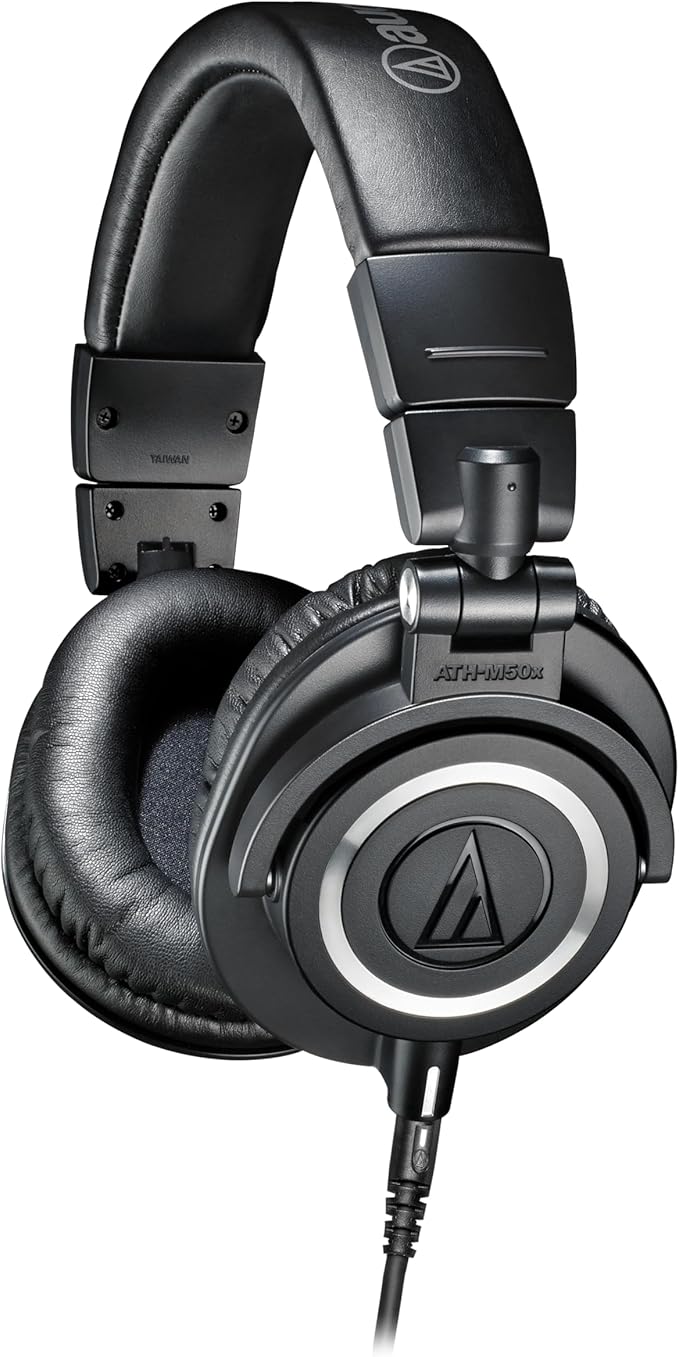
Home-studio producers needing one pair for recording and mixing should consider the ATH-M50x. Its official product specifications list 45 mm drivers, a 15 Hz to 28 kHz frequency response, and 38-ohm impedance. The closed-back construction also helps limit sound leakage during recording.
Its appeal goes beyond basic monitoring. Audio-Technica highlights deep bass response and detailed reproduction across an extended frequency range, making the headphones useful for examining vocals, instruments, and low-frequency elements. We see this combination as particularly practical for producers who need to listen closely without allowing excessive headphone sound to reach a nearby microphone.
The rotating earcups support one-ear monitoring, while the collapsible design makes the headphones easier to pack away between sessions. The package also includes three interchangeable cables: a short straight cable, a longer straight cable, and a coiled cable. This flexibility is useful when moving between a desk, recording position, and equipment rack.
The 38-ohm impedance makes the ATH-M50x a practical candidate for many audio interfaces and headphone outputs. Nevertheless, you should check your equipment’s output specifications rather than assuming every device will deliver the same listening level. The supplied quarter-inch adapter also supports connections to compatible studio equipment.
One limitation is its closed-back presentation. According to this comparison of headphone designs, closed-back and open-back headphones differ in sound leakage, isolation, and perceived spaciousness. We recommend checking your mixes against familiar reference tracks and other playback systems instead of relying on one pair alone.
Who should skip it:
-
Producers specifically seeking an open-back design for dedicated mixing in a quiet room.
-
Users who prefer the lighter, more ventilated feel of an open earcup.
-
Anyone whose primary requirement is a wireless monitoring setup.
2. Sony MDR7506 Professional Large Diaphragm Headphone
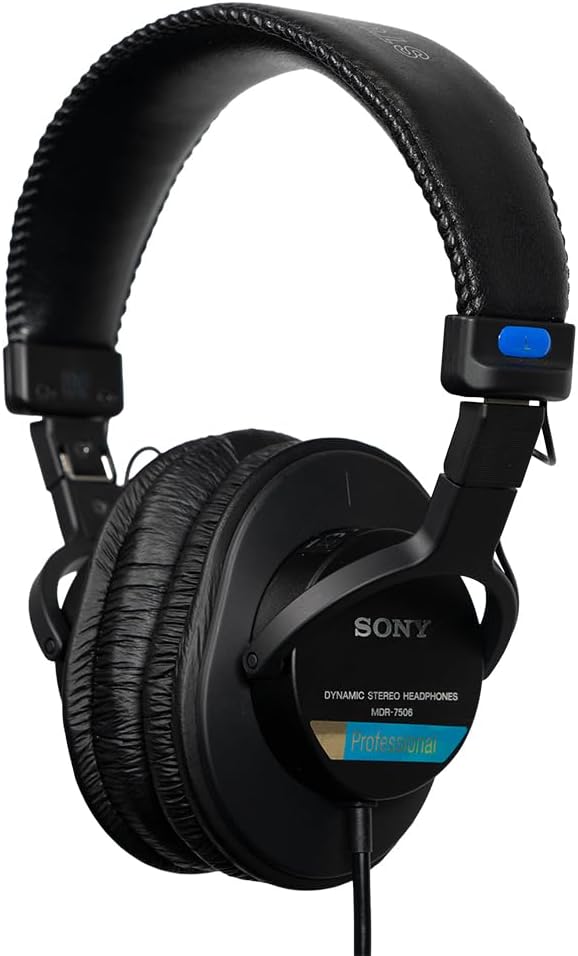
The Sony MDR-7506 is worth considering for recording musicians, podcasters, and home-studio producers who need closed-back monitoring with a straightforward wired connection. Sony’s official product details describe 40 mm neodymium driver units, a 10 Hz to 20 kHz frequency range, and a 3-meter cable.
For audio work, the closed-back format helps reduce sound escaping into the surrounding room. That makes this model particularly relevant when musicians are monitoring backing tracks while recording vocals or instruments near an open microphone. It can also be useful when outside noise would distract you during editing and close listening.
The relatively long cable offers flexibility around a desk or recording position without requiring you to sit directly beside your computer. Sony also supplies a plug adapter, supporting connections to compatible headphone sockets. We particularly value this straightforward approach for setups where reliability and familiar wired operation matter more than wireless convenience or app-based features.
The frequency-response specification describes the range the headphones can reproduce, but it does not establish that every frequency will sound equally loud. For dependable mixing decisions, compare the same passages across reference recordings, paying particular attention to vocals, bass balance, cymbals, and the relationship between instruments. This helps reduce the risk of making decisions based on the headphones’ presentation alone.
There are trade-offs. The cable is not described as detachable in Sony’s published product details, and the design lacks the multiple interchangeable cable options found on some alternatives. Buyers should also verify the exact regional model specifications before ordering, as manufacturer listings can present different published details.
Who should skip it:
-
Producers who require a detachable cable for convenient replacement.
-
Mixers seeking interchangeable ear pads as a priority.
-
Users looking for a dedicated open-back headphone for quiet-room mixing.
3. AKG K240STUDIO Semi-Open Studio Headphones
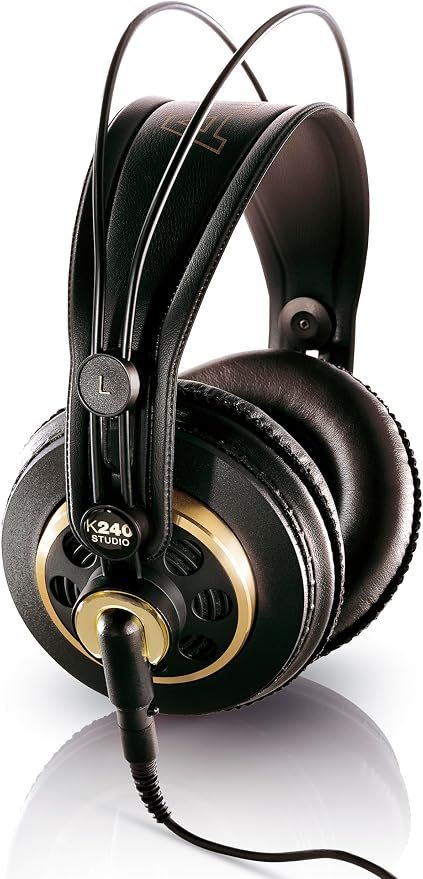
The AKG K240 Studio is a practical option for home producers, musicians, and audio students seeking semi-open headphones for studio mixing and general monitoring. Its official specifications list 30 mm transducers, a 15 Hz to 25 kHz frequency range, 55-ohm impedance, and sensitivity of 104 dB SPL/V.
The semi-open design distinguishes this model from fully enclosed monitoring headphones. AKG describes its construction as offering a solid bass range alongside clear high frequencies. For mixing, this can provide a useful listening alternative when examining instrumental detail, tonal balance, and the relationship between different elements in a recording.
The self-adjusting headband and over-ear pads are designed for comfortable positioning, while replaceable ear pads can help with maintenance. The detachable mini-XLR connection also means you are not tied permanently to the original cable. AKG includes a 3-meter cable and a screw-on adapter for compatible quarter-inch connections.
Its 55-ohm impedance and published sensitivity provide useful starting points when checking compatibility with your interface, mixer, or other headphone output. The relatively long cable can work well at a studio desk, although it may become cumbersome in compact workspaces. The headphone is also non-foldable, so it requires more consideration when packing or storing it.
The key limitation is isolation. As explained in this guide to open and closed designs, semi-open headphones generally permit more sound leakage than sealed alternatives. We would therefore favor this model for quieter listening and mixing work rather than recording next to sensitive microphones. Use it alongside reference tracks and other playback devices to assess how well your decisions translate.
Who should skip it:
-
Musicians who need strong isolation for vocal or instrumental tracking.
-
People who frequently transport headphones and prefer folding earcups.
-
Producers who need minimal sound leakage in a shared room.
4. AKG Pro Audio K712 PRO Open-Back Reference Headphones
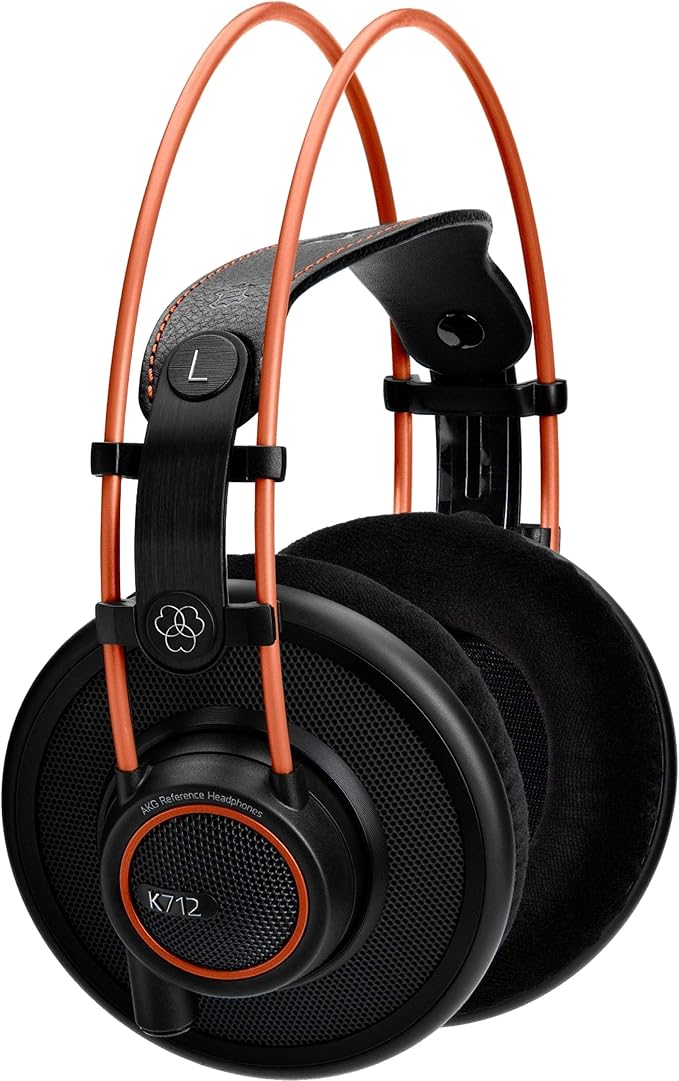
The AKG K712 PRO is designed for producers and engineers who spend substantial time mixing and mastering in a quiet studio. Its official product listing identifies it as an open-back reference headphone, with a frequency range of 10 Hz to 39.8 kHz, 62-ohm impedance, and sensitivity of 105 dB SPL/V.
AKG highlights spacious sound presentation and accurate sound localization as important characteristics. These qualities can be useful when evaluating stereo placement, reverb, and the separation between instruments. Its published specifications and intended application make it a relevant choice for dedicated listening work, although they cannot guarantee that every mix will translate accurately to speakers.
The over-ear construction includes a soft leather headband, replaceable ear pads, and a detachable cable with a professional mini-XLR connection. AKG also lists a coiled cable and a carrying bag among the supplied accessories. These details are worth considering if you want a dedicated studio pair with replaceable components and practical storage.
At 235 grams without the cable, the K712 PRO is relatively lightweight by published product specifications. Its open-back construction allows more air and sound to pass through the earcups, which can feel less enclosed during listening. The 62-ohm impedance is another specification worth checking against your interface’s headphone output, particularly if you expect to use multiple devices.
The main drawback is its limited suitability for recording in environments requiring isolation. Open-back headphones generally leak sound and allow outside noise to enter, so they are not ideal beside a live microphone. We would treat the K712 PRO as a dedicated mixing tool for quieter rooms and check the finished mix against familiar reference tracks or studio monitors before finalizing decisions.
Who should skip it:
-
Vocalists who need enclosed headphones to minimize microphone bleed.
-
Producers who regularly mix in noisy environments.
-
Users who require foldable headphones for frequent travel.
5. Sennheiser HD 490 PRO Open-Back Professional Headphone
The Sennheiser HD 490 PRO is intended for producers, mix engineers, and mastering professionals who want dedicated open-back headphones for detailed studio work. Its official product page describes an open-back design, dynamic transducers, a 130-ohm impedance, and a weight of 260 grams without the cable.
One of its most useful features is the inclusion of two interchangeable sets of ear pads, designed separately for mixing and producing. This gives you alternative listening presentations for different tasks without buying a second pair of headphones. The pads are also washable and replaceable, supporting routine maintenance over the life of the product.
Sennheiser describes the design as providing detailed spatial presentation and precise localization. Its low-frequency cylinder system is intended to help reproduce clearly defined bass, which is relevant when examining kick drums, bass instruments, and other low-frequency elements. These manufacturer-described features are useful considerations, but your own listening checks remain essential when making final mix decisions.
The headphones use a detachable cable and support connections through 3.5 mm and 6.3 mm plugs with the supplied adapter. At 130 ohms, they deserve a compatibility check before use with less powerful headphone outputs. The standard HD 490 PRO package includes a 1.8-meter cable and both ear-pad sets; the extra cable and case are associated with the separate Plus package.
Its main disadvantage is the open-back construction, which offers little isolation in noisy surroundings and allows sound to escape into the room. For this reason, we see it as best suited to focused mixing rather than every recording situation. Use the supplied pad options as intended, compare against known references, and verify the final mix on other playback systems.
Who should skip it:
-
Users who need closed-back headphones for recording near microphones.
-
Producers whose equipment cannot adequately drive a 130-ohm headphone.
-
Buyers who specifically need the additional cable and carrying case supplied with the Plus version.
Final Thoughts
Choosing studio monitor headphones means balancing isolation, comfort, sound presentation, and compatibility with your equipment. Closed-back designs are useful for tracking and shared spaces, while semi-open and open-back alternatives offer different listening experiences for quieter mixing environments. Detachable cables and replaceable ear pads can also make ownership more convenient.
Before buying, consider where you record, which tasks you perform most often, and how your headphones connect to your audio interface. We recommend using reference tracks and checking completed mixes across several playback systems. The best choice is the pair that supports consistent, informed listening decisions throughout your workflow.
Be First to Comment