Smooth video pans can make a tutorial, interview, product demonstration, or livestream feel more polished, but even a good camera can record distracting jolts when its support system is unstable. Small teams also need gear that fits their camera setup and workspace.
Choosing a fluid head tripod is not as simple as picking the tallest model or the largest advertised payload. Head movement, load capacity, setup, portability, and quick-release compatibility all affect whether a tripod suits your everyday recording work.
We researched the category, checked current listings and manufacturer specifications, and compared the options for different video workflows. This guide brings together five considered picks, with practical benefits and limitations to help you choose confidently.
How We Selected the Best Fluid Head Tripods
We focused on how each tripod could serve common small-business filming situations, from desk-based tutorials to interviews and event recording. We checked current product listings and manufacturer specifications for load capacity, height, materials, head movement, plate compatibility, included accessories, and folded dimensions.
Then we weighed those details against practical trade-offs. A high payload rating is useful only if the system fits your camera and accessories; a tall tripod may be awkward to carry, while a simple head may lack adjustments needed for repeatable pans.
-
Load capacity: Leave room for your camera, lens, cage, and other mounted accessories.
-
Head movement: Check panning range and tilt movement against the shots you plan to capture.
-
Height and footprint: Make sure the working height and folded size suit your space.
-
Stability: Leg construction, spreaders, and feet all contribute to a steady setup.
-
Mount compatibility: Confirm the quick-release plate and screws match your camera or cage.
-
Portability and extras: Consider carry weight, folded length, bag, and included setup tools.
These picks balance height, payload, portability, and control in different ways. We recommend choosing according to your actual camera rig and most frequent shooting conditions.
Best Fluid Head Tripods for Smooth Video Panning
These five options suit different filming setups, from sturdy full-size systems to a lighter tripod for mixed photo and video use. Our recommendations focus on practical differences that matter during everyday shooting.
1. Cayer BV30L Video Tripod with Fluid Head, 72-Inch Heavy-Duty Twin Tube
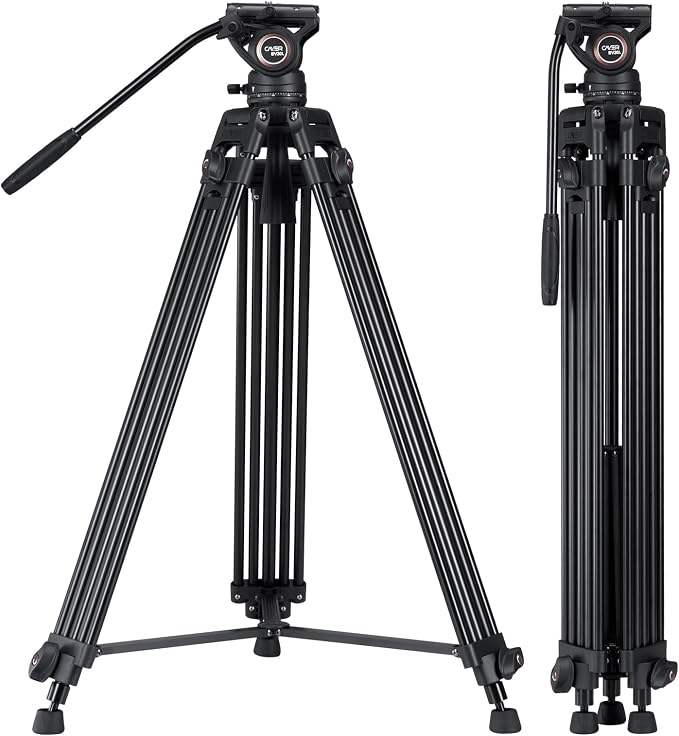
The Cayer BV30L fits creators needing full-height support for DSLR, mirrorless cameras, or camcorders in studios, classrooms, or event spaces. Twin-tube aluminum legs, a mid-level spreader, and K3 fluid head prioritize stability. The current listing rates it for 6 kg (13.2 lb).
Its head pans 360 degrees and tilts from -70 to +90 degrees, helping follow presenters or product demonstrations. The 75 mm flat base also fits compatible sliders or supports. Smoothness still depends on balancing the camera, choosing a suitable pace, and moving the handle steadily.
It folds to about 35 inches and weighs 8.8 pounds, making it better for a studio or car-to-location work than long walks. The kit includes a carrying bag, two quick-release plates, and hex wrenches. Rotating leg locks adjust each section for setup.
We recommend leaving a safety margin below the payload limit after adding a lens, microphone, monitor, and other accessories. Capacity alone does not guarantee stable movement, and the lowest-rated component sets the system limit. B&H’s tripod guide explains why payload and stability both matter.
Its 6 kg limit leaves less room for a cinema-style rig with accessories. For best results, spread and lock the legs on level ground, level the head, secure the plate, and release the pan or tilt lock before moving the camera for the next shot.
A few cautions:
-
Skip it if your setup exceeds 6 kg or needs more capacity for future accessories.
-
Consider a lighter tripod if you regularly carry gear between distant filming locations.
2. NEEWER 79-Inch Video Tripod, Heavy-Duty Aluminum Alloy (TP-M200)
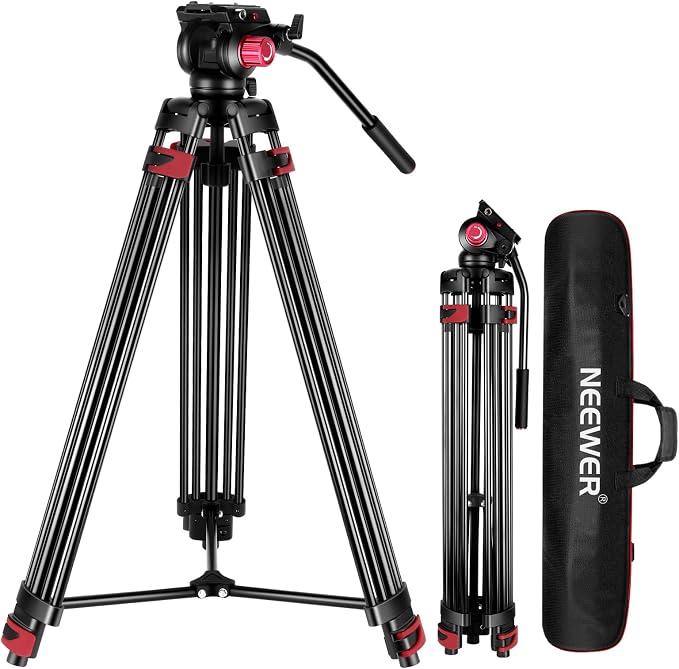
The NEEWER TP-M200 suits small production teams, educators, livestreamers, and event videographers wanting a tall support system. The official specifications list aluminum-alloy construction, an 8 kg (17.6 lb) payload, and a maximum height of 200 cm, or 78.7 inches.
Its fluid head pans through 360 degrees and tilts from -70 to +90 degrees, helping you follow a speaker. A 70 mm bowl base supports leveling, and the quick-release plate uses 1/4-inch and 3/8-inch screws. Check your camera plate before filming.
The three-section legs use flip locks, and the tripod folds to about 35.8 inches. NEEWER lists a weight of 9.87 pounds and includes a carrying bag. That makes it more practical for studio or car-to-location shoots than ultralight hiking or frequent public-transit travel.
Its appeal is extra height, an 8 kg rating, and a fluid head. However, the maximum load does not tell us how well every rig will balance or what drag the head provides. For demanding moves, test your complete setup safely, especially when adding accessories.
Extend the legs evenly, secure each flip lock, level the bowl, and confirm the plate is locked before releasing the camera. Leave room below the load limit, particularly with a monitor or microphone, and keep the tripod on a stable surface throughout your pans.
A few things to note:
-
Skip it if carrying a roughly 10-pound tripod is impractical for your workflow.
-
Check the head movement and plate fit with your own rig before a paid shoot.
-
Avoid it if your storage space cannot accommodate a 35.8-inch folded tripod.
3. NEEWER BASICS 74-Inch Video Tripod with Fluid Head (TP37)
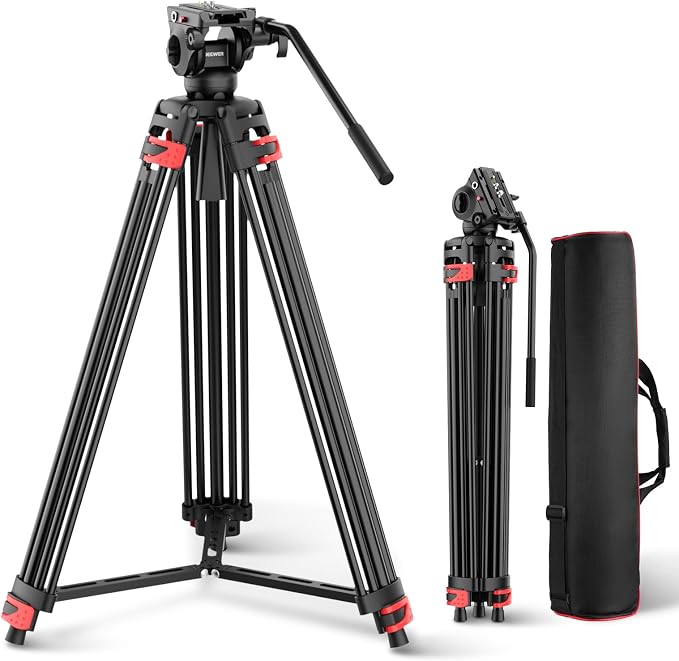
The NEEWER BASICS TP37 suits new creators, small-business marketers, and office teams filming interviews, tutorials, or product demos. NEEWER’s official listing specifies an all-metal build, an 8 kg (17.6 lb) load capacity, and height adjustment from about 33 to 74 inches.
Its damped fluid head supports pans and tilts, while the quick-release plate and clamp are compatible with the 501 mounting system. The head also has 1/4-inch and 3/8-inch mounting points for compatible gear. Check your camera cage and plate configuration before filming.
Three-section legs use flip locks, and a triangular mid-level spreader helps keep the legs positioned. An enlarged 73 mm chassis supports the head, while nonslip rubber pads meet the floor. These features make the TP37 practical for a small home studio or meeting room.
The main trade-off is simplicity. NEEWER positions this as a BASICS model, emphasizing essential functions rather than premium extras. The package lists the tripod and an L-shaped hex key, but no bag, so plan separate transport protection. It weighs 8.9 pounds.
We recommend setting it up on level ground, locking all leg sections, checking the spreader, and securing the plate before panning. Leave room below the 8 kg rating for accessories. For front-heavy rigs or demanding drag control, we would consider a more specialized head.
Notes of caution:
-
Skip it if a carrying bag is essential and you do not want to buy one separately.
-
Choose a more advanced head if your videos need specialized counterbalance or drag adjustment.
4. COMAN FF16LS Heavy-Duty 74-Inch Fluid Head Video Tripod
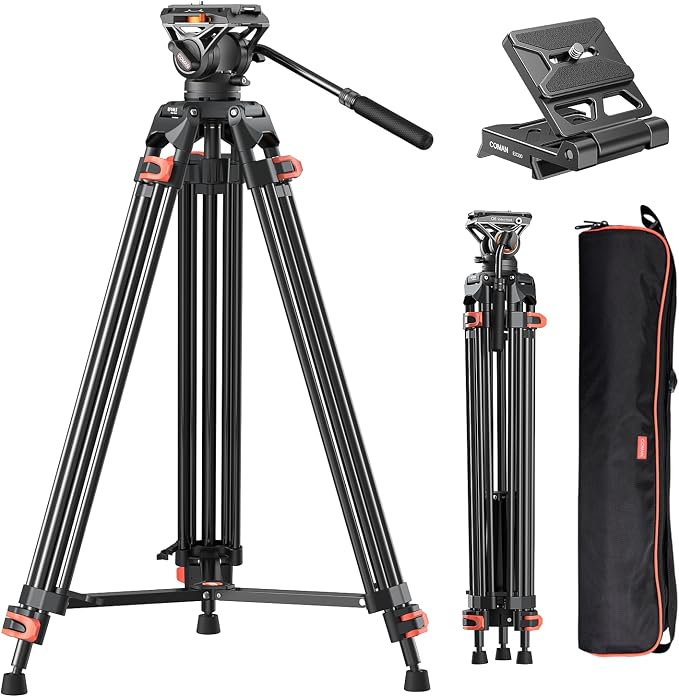
The COMAN FF16LS suits creators filming events, interviews, tutorials, or other work where a sturdy base and quick camera changes matter. The Amazon listing identifies the FF16LS with a Q6 head and states a maximum load of about 10 kg (22 lb).
The listing describes 360-degree panning and tilt from roughly -75 to +90 degrees. A 60 mm bowl base helps with leveling; mid-level spreaders link the legs for stability. The quick-release system speeds changes, but check your camera’s plate standard and accessories.
The aluminum tripod uses three leg sections and folds to about 35 inches. Its maximum height is roughly 73 inches, which suits studio work or shoots where you transport gear by car. It still takes more storage space than a compact travel tripod.
The stated 10 kg capacity, fluid head, and quick-release mechanism are the main draw. We should not treat capacity alone as a guarantee of smooth pans: balance, technique, and head drag affect movement. For slow shots, test the assembled setup instead of relying on headline specifications.
Inspect the selected version before ordering. The listing has selectable head variants, so confirm the FF16LS/Q6 configuration and plate system you expect are in your cart. Once assembled, level the head, secure the locks, and begin pans gently rather than forcing the handle.
A few cautions:
-
Skip it if you need a compact, lightweight tripod for frequent walking shoots.
-
Confirm the selected head and quick-release plate before checkout.
-
Treat 10 kg as a maximum rating, not a target working weight.
5. Manfrotto 290 Xtra Aluminum 3-Section Tripod Kit
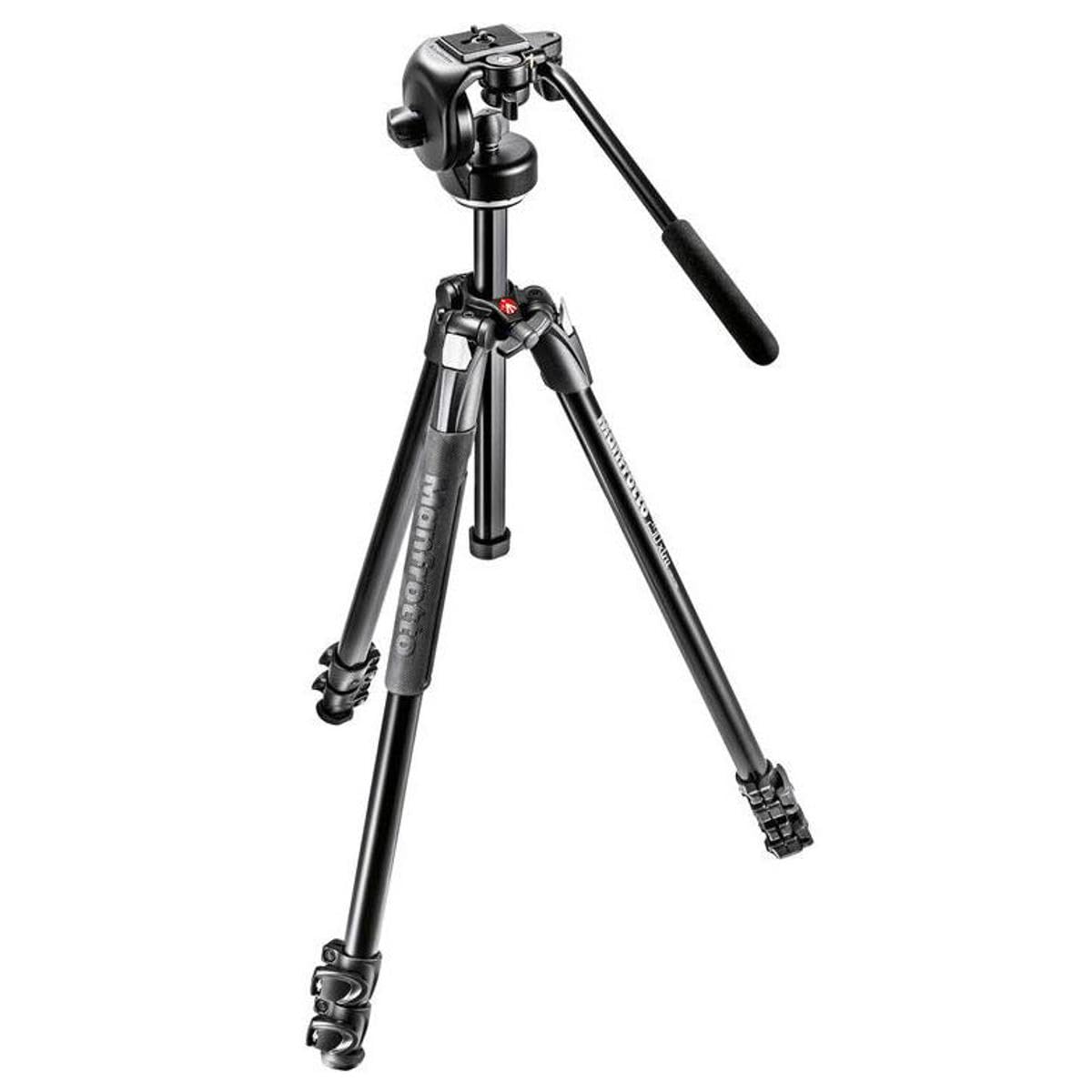
The Manfrotto 290 Xtra kit suits hobbyist videographers, solo creators, and small offices wanting an aluminum tripod for lighter video work and general camera use. The manufacturer’s product page identifies the MK290XTA3-2WUS with a 128 RC two-way fluid head and a 6 kg safety payload.
Its three-section legs use adjustable-tension flip locks, and four leg-angle positions help on uneven ground. A rapid center column simplifies height changes, while a rubber leg warmer improves grip. The kit includes a shoulder bag and quick-release plate for simple setup.
The 128 RC head supports video-style pan and tilt with a handle and independent locks. Manfrotto lists a maximum height of 169.5 cm, about 66.7 inches, and a weight of 2.56 kg. It is easier to pack between sessions than heavier tripods.
One limitation for panning is the lack of adjustable drag. The manufacturer lists no pan or tilt drag adjustment, so you cannot dial in extra resistance for very slow moves. We would choose a dedicated head for more demanding operation.
For best results, spread the legs, choose a leg angle, tighten locks, and level the camera before recording. Use independent locks to secure a frame when stationary, not to create drag during a move. Keep the full rig within the stated 6 kg payload.
A few things to consider:
-
Skip it if your rig exceeds 6 kg or requires adjustable pan and tilt drag.
-
Choose a taller tripod if framing regularly needs a camera position above 169.5 cm.
Final Thoughts
Choose a tripod by matching its rated capacity to your full camera rig and the movements you make most often. Height, folded length, head controls, and plate compatibility can matter as much as load, especially when switching between studio and location shoots.
Before buying, confirm the current model and plate requirements, and leave a margin below the rated payload. The best support is not simply the tallest or heaviest option; it is the one that helps you frame consistently on every shoot.
Be First to Comment