A reliable photography backdrop stand helps us create clean, consistent backgrounds for portraits, product photography, video recording, and professional content creation. The right support system keeps our setup organized, makes changing backgrounds easier, and helps us get more from a limited studio space.
Choosing one can be confusing because these stands vary in height, width, portability, mounting style, and weight capacity. Some are designed for quick setups in different locations, while others work better as permanent studio installations. A stand that suits one photographer might be unsuitable for another’s workspace.
We carefully examined the category, researched the available market information, and compared the relevant models to select five photography backdrop stands worth considering. Our guide explains their practical advantages, important limitations, and intended uses, helping us choose a setup that fits our equipment, shooting requirements, and available space.
How We Selected the Best Photography Backdrop Stands
We began by separating the options according to their intended use. Freestanding systems suit temporary setups, compact T-frame stands accommodate smaller backgrounds, and wall-mounted rollers help studios manage several background rolls without occupying much floor space.
Next, we cross-checked available manufacturer documentation and product records against the supplied model identifiers. When current documentation lacked important details, such as a verified load rating or included mounting hardware, we treated those specifications as unconfirmed rather than assuming the equipment could support every backdrop.
-
Coverage and adjustability: We prioritized dimensions that help you frame subjects properly without unnecessary equipment.
-
Weight capacity: A verified limit helps you avoid overloading a frame with heavy fabrics or props.
-
Stability: Tripod bases, appropriate ballast, and secure mounting contribute to safer, more dependable setups.
-
Setup and storage: Foldable components and carrying bags matter when you regularly move between locations.
-
Background management: Manual rollers offer different advantages from conventional crossbars and clips.
-
Package completeness: Clearly identified accessories help you understand which additional components you may need.
These five options serve different studio layouts and photography requirements. We begin with versatile portable systems before considering specialized alternatives for smaller backgrounds and permanent installations.
Best Photography Backdrop Stands for Studios
Our recommendations cover a range of shooting environments, from home studios and small businesses to more established spaces that use multiple backgrounds. The most suitable choice depends on how much coverage you need and how frequently you rearrange your setup.
1. EMART Backdrop Stand 10x7FT Adjustable Back Drop Stand for Party
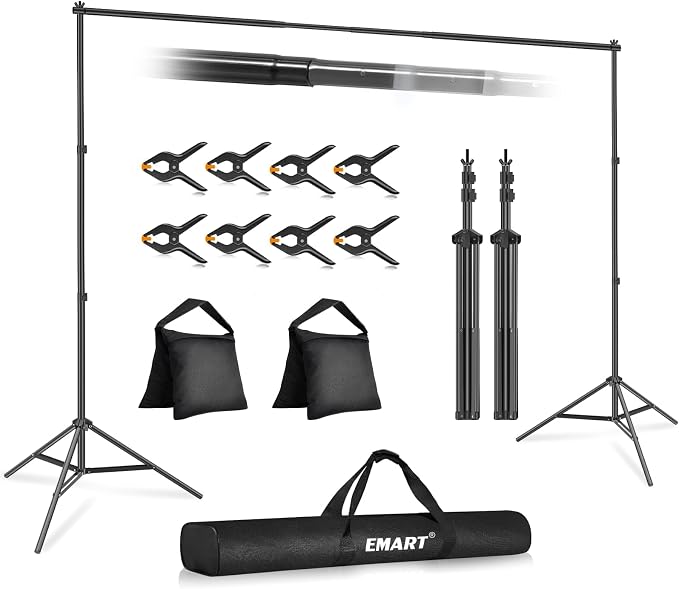
The EMART 10×7-foot backdrop stand suits independent photographers, home studios, and event creators who need a freestanding background support system. Its adjustable crossbar accommodates different shooting arrangements, making it practical for portraits, product photography, video recording, and temporary decorative backdrops.
The stand adjusts from approximately 2.6 to 7 feet high, while its crossbar extends from about 5.3 to 10 feet wide. These dimensions, documented in the available setup instructions, give us flexibility when switching between narrower framing and wider backgrounds.
Its listed package includes two tripod bases, two crossbar sections, eight backdrop clamps, two empty sandbags, and a carrying bag. The included accessories help simplify initial setup, although we must fill the sandbags ourselves before using them for additional stability.
One advantage is the relatively straightforward freestanding design. We can position the frame wherever the shooting area allows, without installing permanent wall or ceiling hardware. The carrying bag also makes storage and transportation more convenient when the stand is not needed.
There are limitations to consider. The available manual specifies a crossbar limit of 10 pounds, so we should not treat this system as a support rack for heavy props or equipment. Its maximum height may also be insufficient for certain tall subjects or elaborate full-length scenes. Before shooting, we should fully extend the tripod legs, tighten the locks, secure the fabric, and add properly filled sandbags.
Who should skip it:
-
Photographers who regularly use very heavy backdrops or suspended props.
-
Studios that need greater height for specialized full-body or large-scale scenes.
-
Users who prefer a permanent, ceiling-mounted background storage system.
2. NEEWER 8.5x10ft Backdrop Stand Kit, Photography Background
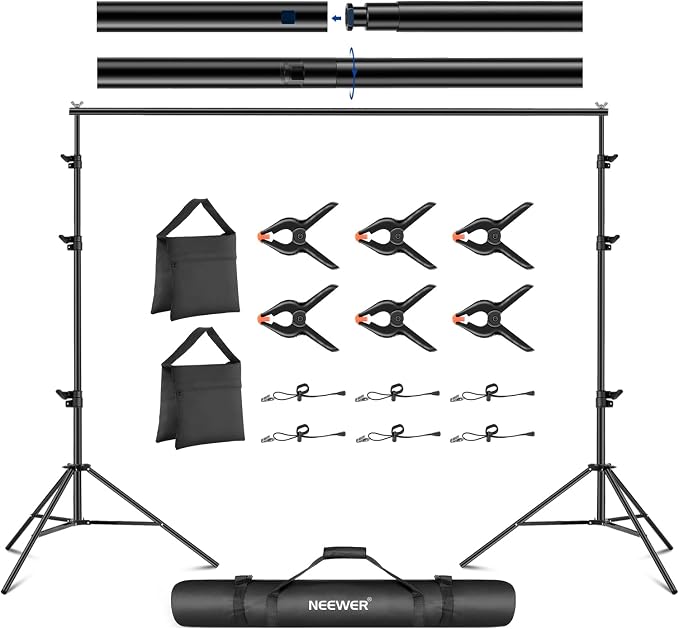
The NEEWER 8.5×10-foot backdrop stand kit is well suited to photographers and small production teams who need a portable frame for portraits, interviews, product demonstrations, and video content. Its adjustable dimensions make it useful when the same workspace serves several creative purposes.
According to the manufacturer’s official product specifications, the aluminum-alloy stands adjust from approximately 2.9 to 8.5 feet high. Four connectable crossbars provide a maximum width of 10 feet and can be arranged for narrower setups.
The manufacturer specifies an 11-pound maximum crossbar load capacity. This is an important practical limit because background material, clips, and any additional items placed on the bar contribute to the total load. We should stay within that stated rating rather than assuming the frame can support heavier materials.
The kit includes two support stands, four crossbars, six spring clamps, six backdrop clips, two empty sandbags, and a carrying bag. The clamps help secure the fabric, while the additional clips can help pull the backdrop taut and reduce visible wrinkles. The sandbags need filling before use.
Its combination of adjustable width, useful accessories, and a portable design makes it a flexible option for changing production requirements. However, assembling and adjusting multiple crossbar sections takes some attention, and the load rating rules it out for particularly heavy backgrounds. We should assemble the frame on a level surface, lock the joints securely, and use suitable ballast before attaching the backdrop.
Who should skip it:
-
Studios that need a frame rated for heavy canvas or suspended scenery.
-
Users who cannot accommodate two freestanding support legs.
-
Photographers who need permanently installed, instantly accessible background rolls.
3. NEEWER Photography 4 Roller Wall Mounting Manual Background Support
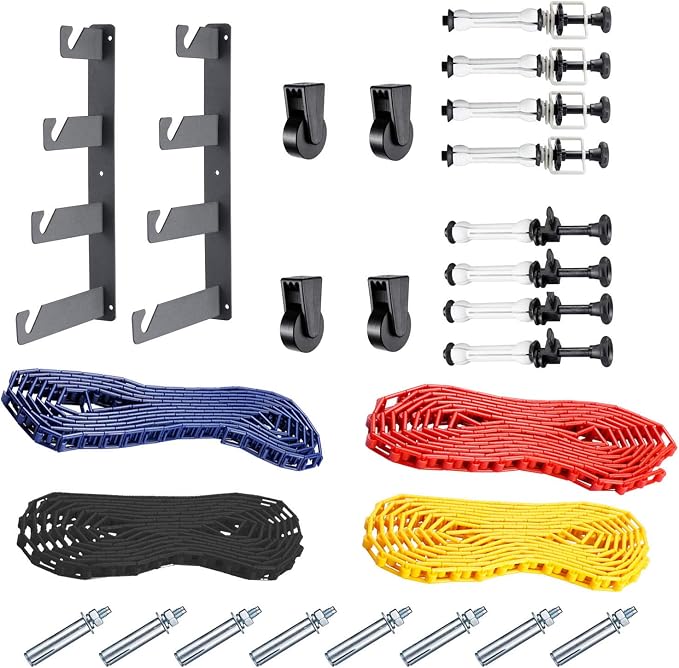
The NEEWER four-roller manual background support system suits established home studios and small commercial photography spaces that regularly switch between different background colors or materials. Instead of placing a separate freestanding stand in the shooting area, we can organize several rolls overhead using a wall- or ceiling-mounted arrangement.
Its main feature is a manual chain-and-gear mechanism for raising and lowering backgrounds. The manufacturer describes this arrangement as a space-saving alternative to a motorized system, allowing backgrounds to remain rolled up when they are not being used. The manufacturer’s product listing identifies the system as a four-roller manual support.
The package includes two four-fold hooks, eight expansion bars, four chains, and eight clamp screws. However, the backgrounds themselves are not included, and the manufacturer specifically identifies the PVC or aluminum tubes as components that must be purchased separately. We should account for these requirements before planning an installation.
The key advantage is background management rather than portability. Once appropriately installed, the system provides a practical way to keep several rolls ready for different shoots while preserving floor space for lighting stands, cameras, furniture, and subjects. Manual operation also avoids dependence on an electric roller motor.
Installation deserves careful consideration. The available manufacturer specifications identify the main components but do not clearly establish a maximum load rating for every possible tube-and-background combination. We should confirm compatibility, mounting requirements, and the suitability of the installation surface before proceeding. This is not a stand we can simply unpack and reposition like a tripod-based kit.
Who should skip it:
-
Photographers who need a completely portable setup for location shoots.
-
Beginners who do not have a suitable mounting location or installation support.
-
Buyers expecting backgrounds and mounting tubes to be included.
4. LINCO Lincostore Backdrop Stand Kit 5×6.7ft T-Frame
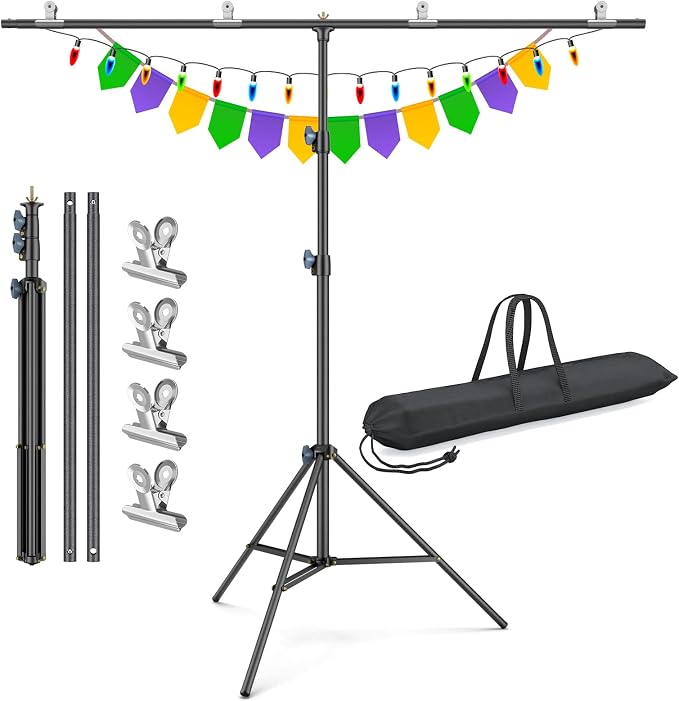
The LINCO Lincostore T-frame backdrop stand is a practical option for photographers working in compact spaces, especially those producing individual portraits, headshots, or smaller product images. Its narrow format makes sense when a full-width background support system would occupy more room than the subject requires.
The available model specifications identify a fixed width of 5 feet and an adjustable height of approximately 2.6 to 6.7 feet. The product is also listed at roughly 4 pounds, giving it a compact profile for storage and transport between suitable shooting locations.
Its T-shaped design distinguishes it from conventional two-tripod systems. Rather than spanning a larger shooting area, it offers a narrower support arrangement intended for smaller backgrounds. We may find this especially useful for tightly framed portraits, simple demonstrations, or product photography where the background does not need to extend widely beyond the subject.
Available product details also identify a two-piece crossbar arrangement and backdrop clamps. These features support routine background changes, although the exact package contents should be checked against the seller’s current listing before ordering. The accessible documentation for this specific model is more limited than the manufacturer’s detailed specifications available for some competing systems.
That information gap matters because we should not assume a load rating, frame material, or universal compatibility that has not been verified. Its fixed width is another important consideration: it offers less flexibility than adjustable systems designed to span up to 10 feet. We should match the backdrop to the frame’s stated dimensions and confirm the supplied components before the first shoot.
Who should skip it:
-
Photographers who regularly photograph groups or require wide backgrounds.
-
Studios that need substantial height for full-body portraits.
-
Buyers who require a clearly documented load rating before making a decision.
5. Photo Video Studio 10 x 10Ft Heavy Duty Adjustable Backdrop Stand
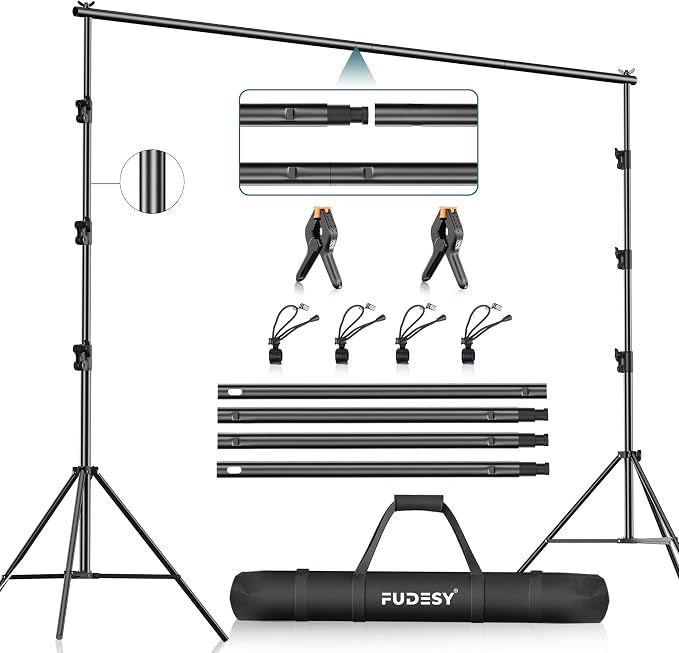
This 10×10-foot adjustable backdrop stand is listed under the FUDESY brand as model FDS3030B. It may suit photographers and video creators who need a broader background arrangement for portraits, full-body framing, or content production. Its stated dimensions make it worth considering when a compact T-frame would provide insufficient coverage.
The available model record identifies the product as a 10×10-foot system and lists an item weight of approximately 11 pounds. Those details help establish its general size and handling requirements, although they do not independently establish the frame’s maximum operating height, crossbar load capacity, or material strength.
The product description identifies an adjustable design, a carrying bag, and two spring clamps. This suggests a portable-style arrangement rather than a permanently mounted roller system. Before purchasing, we should check the current seller listing to confirm the complete package contents and how the frame’s dimensions are configured.
Its main appeal is the advertised 10×10-foot format. A larger support arrangement may be more appropriate when our subjects need additional background coverage, particularly for full-body compositions or broader video framing. Nevertheless, a large stated footprint does not automatically mean the stand can safely support heavy fabrics, elaborate decorations, or equipment attached to its crossbar.
The important limitation is the lack of a clearly verified load rating and detailed current manufacturer specifications in the accessible records. We should not rely on the words “heavy duty” alone to determine what the frame can hold. Confirm the adjustment range, attachment method, and weight limit before use, then assemble the stand on a suitable surface and secure the backdrop without exceeding its documented capacity.
Who should skip it:
-
Buyers who need a verified load rating before selecting a support system.
-
Photographers with very limited space for a larger frame.
-
Users who want a permanently mounted, multi-background roller arrangement.
Final Thoughts
When choosing a photography backdrop stand, we should prioritize usable dimensions, verified load limits, stability, and the type of background we plan to use. Portability matters for location shoots, while wall-mounted rollers make more sense when a studio frequently switches between several background rolls.
Our best choice will depend on the space we have, the subjects we photograph, and how regularly we need to change our setup. By checking specifications and package contents before purchasing, we can select a support system that fits our workflow and makes every shooting session easier to manage.
Be First to Comment